
Review · MILAN LEONARDO DA VINCI TOURS
Milan: Leonardo3 The World of Leonardo Museum Entry Ticket
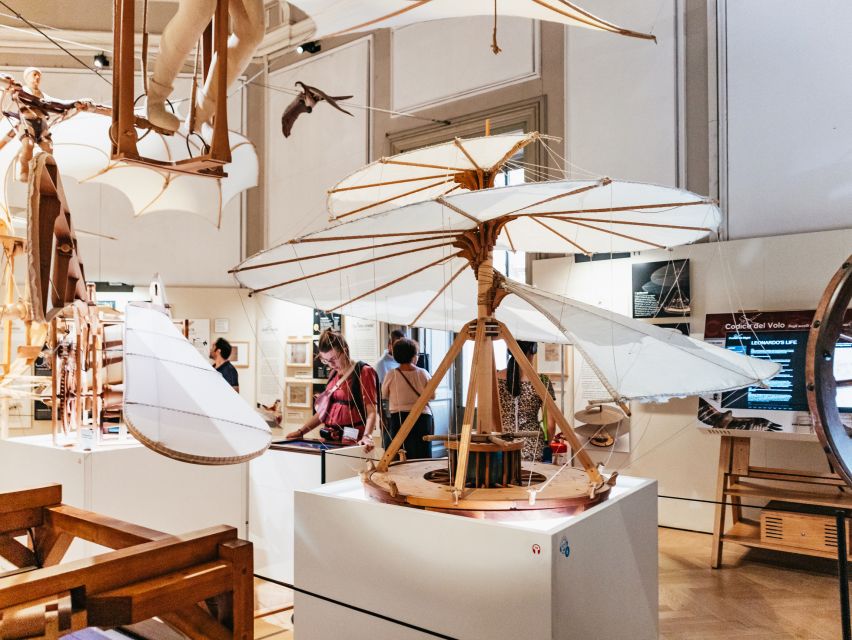
Da Vinci machines made touchable. Leonardo3, The World of Leonardo in Milan, turns Da Vinci’s sketches into hands-on, working-style exhibits, and the optional audioguide helps you connect what you see to the manuscripts behind it. I especially love the sheer scale of 200-plus interactive 3D machines, because you can actually watch ideas become mechanisms.
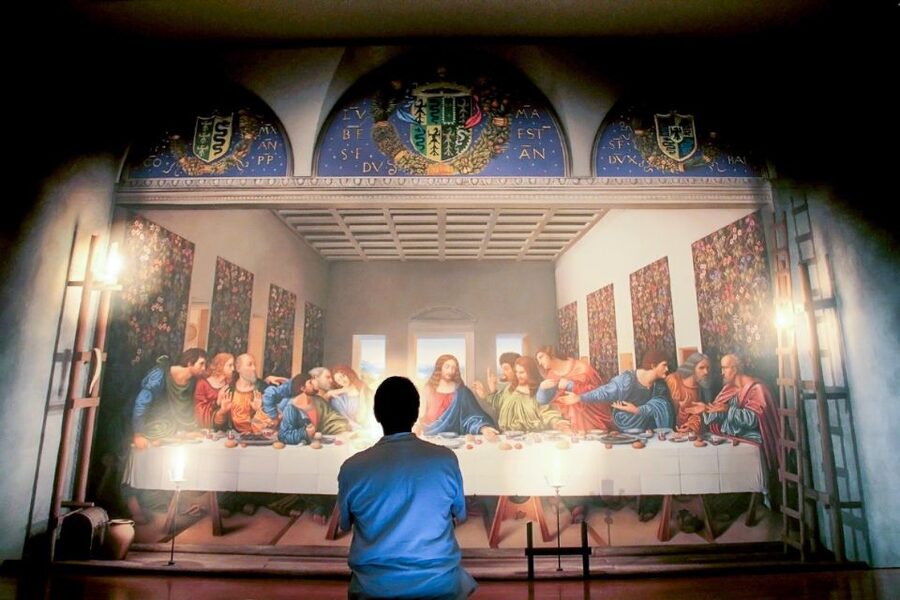
The other big win is the digital Last Supper restoration, presented as an immersive experience that fits the museum’s tech-first approach. One thing to plan for, though: the galleries can feel tight, so moving slowly and taking breaks helps if you get uncomfortable in crowded rooms.
Key things you’ll notice right away
- 200-plus interactive 3D machines recreated from Leonardo’s manuscript studies
- Working-style models like a mechanical dragonfly that make concepts feel real
- Immersive digital Last Supper restoration tied to Leonardo’s craft
- Audioguide support (Italian, English, Russian, German, French, Spanish, Portuguese, Chinese)
- Hands-on workshop areas including kid-friendly building and printing activities
Entering Leonardo3 in Milan near Piazza della Scala
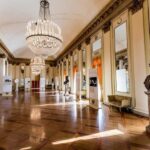
You’ll start at the Galleria Vittorio Emanuele II, right by Piazza della Scala. The museum visit begins with simple, direct instructions: enter through the arcade, then show your ticket at the ticket office. You also end back at that same meeting point, which is nice because you do not need to navigate the rest of Milan just to find your way out.
Why that matters: Milan can be a maze of small lanes and busy crossings. When your museum visit is basically “arrive, enter, explore, exit,” you spend more energy on the exhibits and less on figuring out directions.
If you like to get your bearings fast, arrive a few minutes early and give yourself time to move from the arcade entrance into the museum space. That small buffer helps if you’re visiting at a popular time.
A few more Milan tours and experiences worth a look


Your one-day Leonardo3 ticket, and how long to plan
Your ticket is valid for one day, but it’s still tied to specific starting times, so check the available time slots before you lock in your day. The practical takeaway is to treat Leonardo3 like a main museum stop, not a quick detour.
In terms of pacing, this is the kind of place where you can fly through if you’re rushing, or you can slow down because the displays are interactive and the audioguide encourages you to read what you are seeing. A lot of people end up spending around 1 to 1.5 hours, and some linger longer, especially if they work through the workshops and the more detailed galleries.
Here’s how I’d plan it for value: if you’re also doing The Last Supper in the church of Santa Maria delle Grazie, Leonardo3 works best as the “engineering and invention lens” day companion. If you are skipping the church, Leonardo3 still gives you a Last Supper experience, but in a museum setting with digital restoration rather than a viewing of the original painting.
The workshop areas: mechanical dragonfly, kid activities, and building time
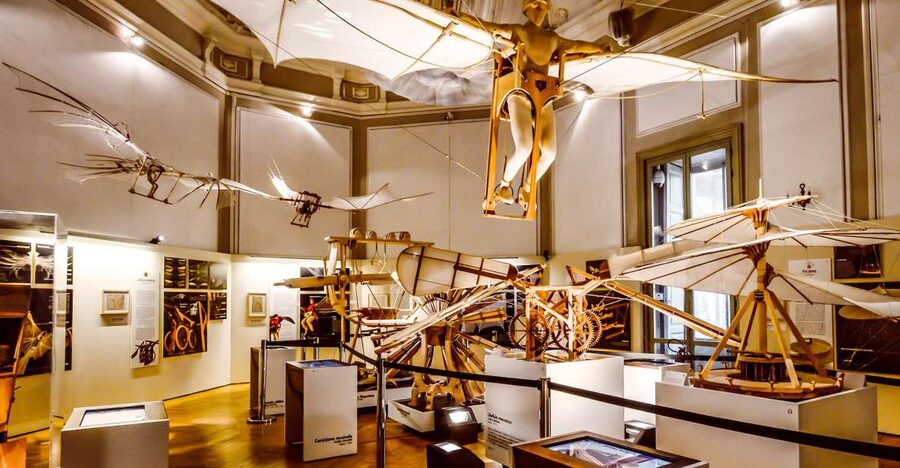
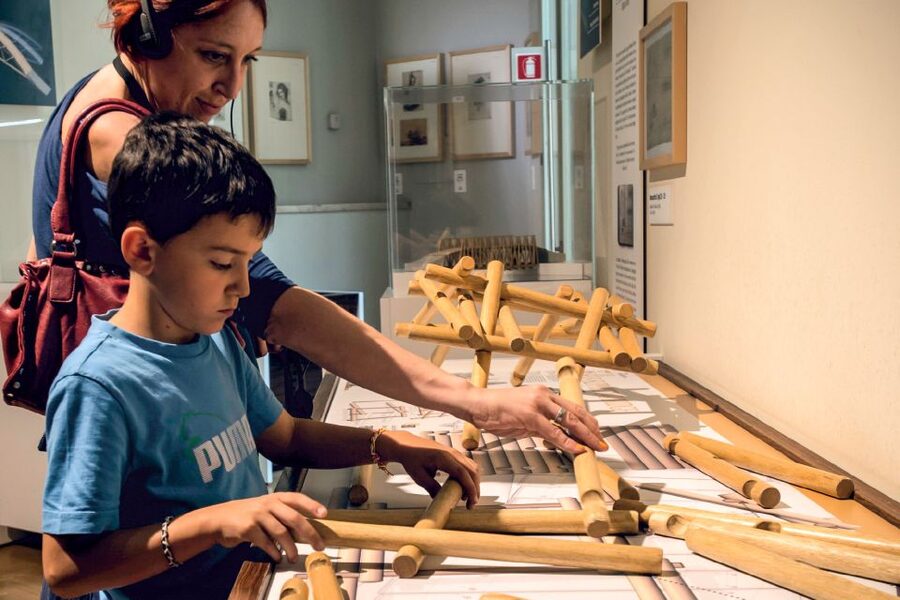
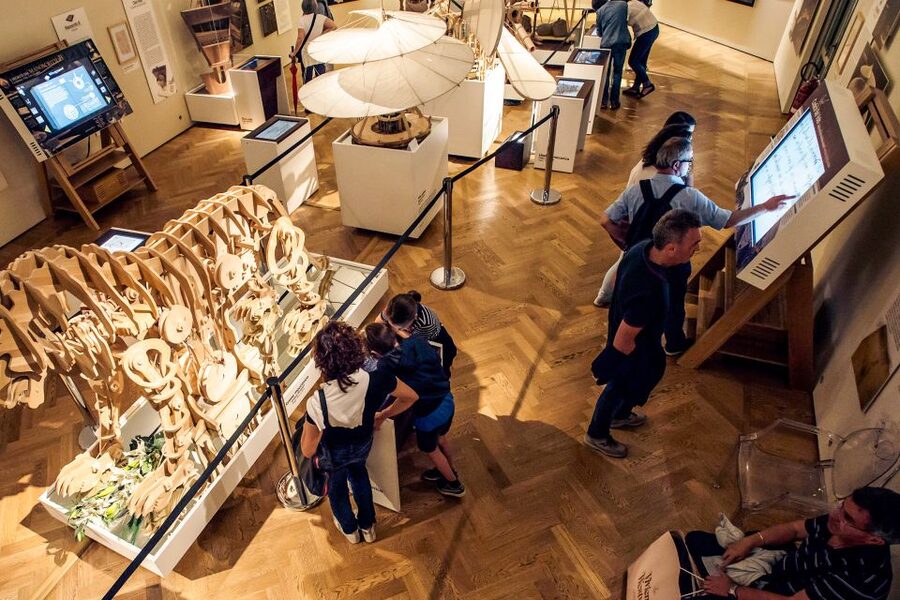
One reason Leonardo3 feels different from a typical museum is that it includes hands-on zones. You’ll find interactive exhibits beyond just screens and displays, and the kid-focused workshop area adds a playful layer to the science.
A highlight is the presence of working-style models such as a mechanical dragonfly. Even if you are not a “hands-on person,” these models help you understand the logic of motion. Leonardo’s inventions can feel abstract on paper, but in a working-style reconstruction, you start to see how gears, linkages, and form work together.
The workshop zone also includes:
- A setup where kids can print an inventor’s certificate
- An activity where kids can assemble a self-supporting bridge out of wooden parts
Even if you are traveling without children, the workshop areas are still useful. They create a rhythm shift, and they make the exhibit feel more like a learning lab than a static gallery. If you have kids, this is also where the experience turns into “active participation,” not just viewing.
Da Vinci’s machines in 3D: more than 200 interactive reconstructions
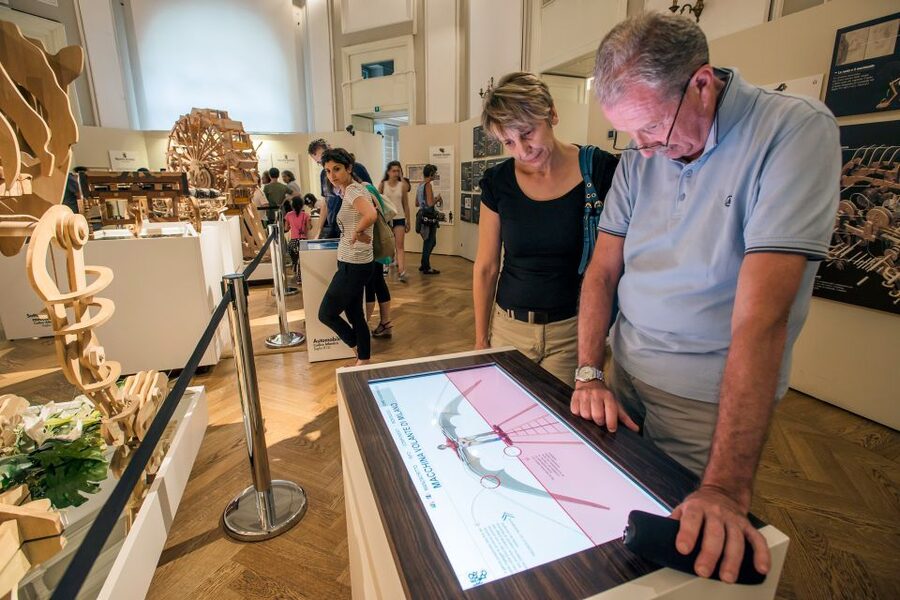
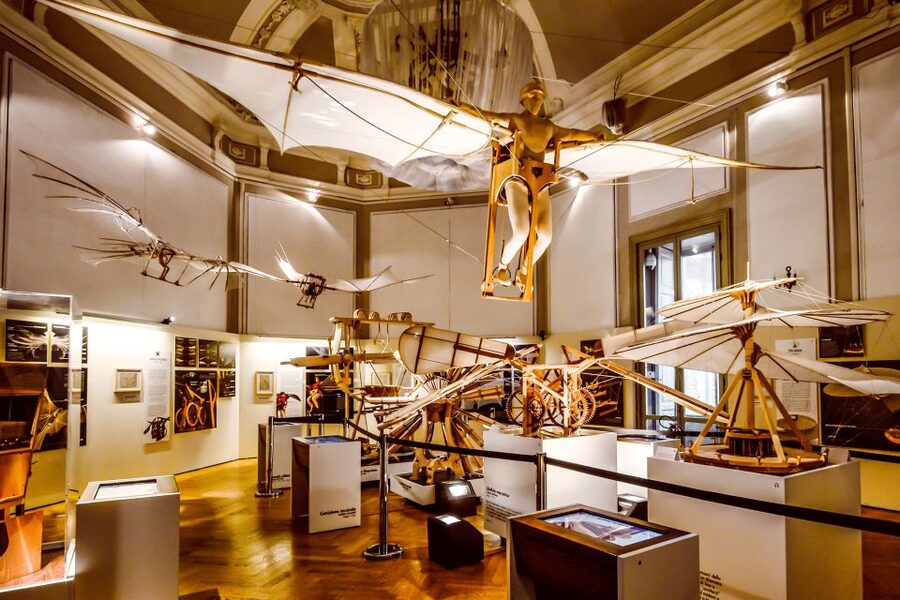
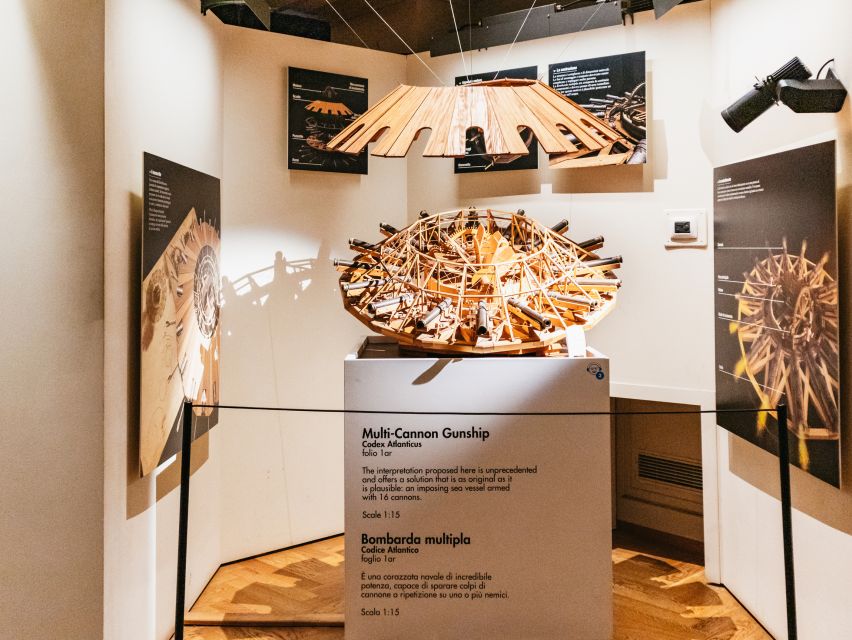
The core of Leonardo3 is the invention world. Expect more than 200 interactive, 3D machines based on studies of Leonardo’s manuscripts. This is where the museum earns its name: it focuses on how Da Vinci thought like an engineer, not just like an artist.
What makes this section worth your attention is that it does not just show drawings. It shows reconstructed ideas, and many exhibits are designed so you can interact with the concept. You get to see how a mechanism might move, and you can connect the exhibit to Leonardo’s written and drawn thinking.
In the galleries, you’ll also notice that the inventions are organized around themes, including subjects like flight, city and canal-related engineering, military and defensive concepts, and theatrical-style ideas. There are also art-related rooms that acknowledge Leonardo’s painterly side, so the museum does not treat him as only a machine-maker.
Where to focus if you want maximum payoff:
- Start with the “big idea” machines first, so you build a mental map of his engineering mindset
- Then go back to smaller details where the audioguide helps you interpret what you are looking at
- If you want a calmer visit, spend more time with the interactive working models, and less time trying to do every single exhibit in one pass
A note on space: because the exhibits are dense, you might not see everything from your first position. If a particular station feels crowded, it’s worth stepping aside, watching for a clear moment, and then trying again.
The digital restoration of the Last Supper, and what it can teach
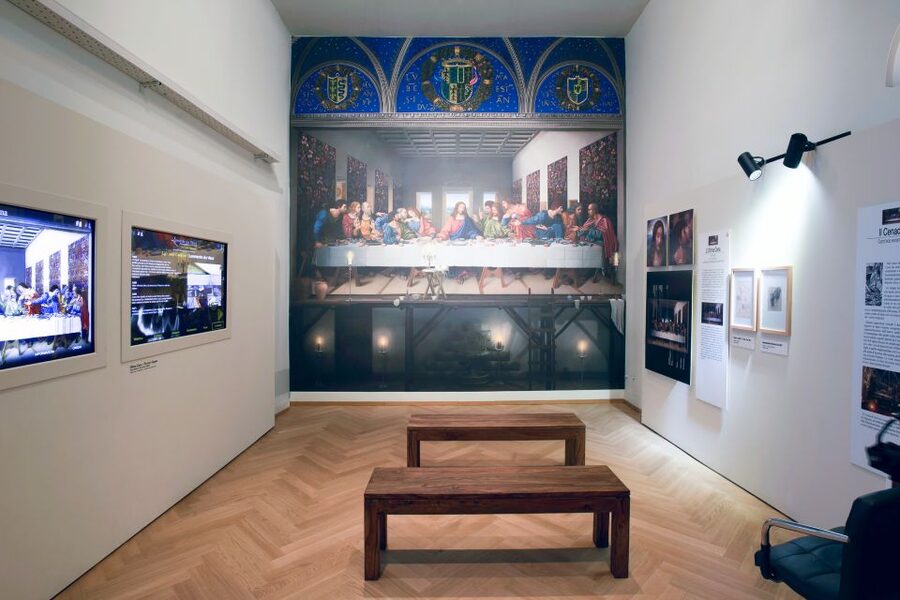
Leonardo3 includes an immersive digital restoration of Da Vinci’s Last Supper. This is not presented as a replacement for seeing the original painting in person, but it is still a meaningful experience because it changes the question from What does it look like? to What might the process and composition involve?
In a museum like this, the point is interpretation through technology. The digital restoration can help you pay attention to details and transitions that you might otherwise gloss over. It also matches Leonardo’s dual identity, artist and scientist, by linking visual craft to design logic.
One consideration: digital restorations can feel like an interpretation, not the same emotional effect as standing in front of the original. If you are sensitive to that difference, aim to treat the digital Last Supper as a guided “understanding tool,” not as your final word on the painting.
You can also read our reviews of more museum experiences in Milan



Audioguide options: languages and why headphones matter
The audio component is one of the best ways to get real value. With the right option selected, you get an audioguide that explains Leonardo’s secrets behind the machines. The exhibit itself uses interactive experiences in English and Italian, but the audioguide expands your options and helps you connect details to Leonardo’s reasoning.
Audio guide languages available include Italian, English, Russian, German, French, Spanish, Portuguese, and Chinese. That variety is great if your group has mixed language needs.
Practical tip: if you’re choosing between reading everything on signs versus listening while you move, the audioguide wins. It reduces cognitive load, so you can focus on the mechanisms and not constantly stop to decode text.
Also, the museum does not allow cameras, so headphones become even more useful. Since you cannot rely on photo documentation, the audio helps you remember what mattered.
What’s included, what’s not, and how to budget
For about $18 per person, you get museum entrance. If you select the audioguide option, that’s included too. There’s also a useful perk at the bookshop: you get 10% off books by showing your GetYourGuide voucher at the counter.
Not included: food and drinks, and transportation to and from the museum. Since you cannot bring food and drinks inside the exhibit area, plan a snack and water strategy around your day outside the museum. It’s common in Milan to want a coffee break, so build in a nearby pause before or after your museum time.
Is $18 good value? I think it is, mainly because you are buying access to a tech-forward, interactive experience with working-style models, a digital restoration, and an optional audio layer. The price makes the museum feel accessible for a one-time stop, especially if you are touring with kids or anyone who likes “see it work” science.
Rules that affect your comfort: cameras and food
There are two “know this before you go” limits:
- No food and drinks
- No cameras
These rules matter because they shape how you move through the exhibit. No camera means you will rely on audio, signage, and your memory. No food means you should plan your timing so you are not hungry while you are trying to absorb details.
If you think you’ll need a break, schedule it. Step out, reset, then come back with a fresh attention span.
Wheelchair access and navigating a tight layout
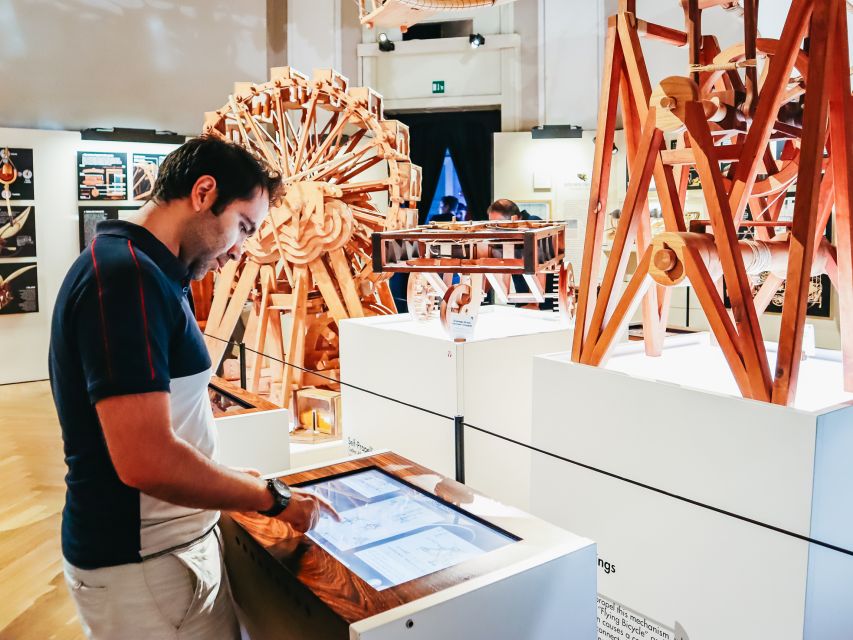
The museum is wheelchair accessible, which is important for planning. Still, based on how the exhibits are arranged, you should anticipate that movement can feel constrained in some areas. If you use a wheelchair or have limited mobility, give yourself extra time and be ready to take your pace.
Best strategy for a smoother visit:
- Approach each station slowly and avoid rushing between crowded points
- When an area feels tight, change your position and try the exhibit from a nearby angle
- Use the audioguide to keep your experience going even if you cannot linger exactly where you first arrive
Where this Leonardo3 ticket fits best in your Milan day
Leonardo3 works especially well if:
- You want a hands-on science and engineering museum in Milan
- You like Da Vinci beyond painting and want his invention side
- You’re traveling with kids, because the workshops and “build” activities add energy
- You want a structured indoor activity that still feels interactive
It may be less ideal if:
- You prefer large, spacious museums with lots of room to spread out
- You strongly dislike digital restorations and prefer original artworks only
The timing tip is simple: choose a starting slot that still leaves you breathing room afterward. If you schedule it back-to-back with multiple big sights, you may feel rushed in a place where learning is part of the experience.
Should you book Leonardo3 – The World of Leonardo Museum entry?
Yes, if you like science, invention, and interactive exhibits, book it. The big reasons are the 200-plus interactive 3D machines, the working-style models that make Leonardo’s ideas concrete, and the optional audioguide that helps you understand the “why” behind what you see. The digital Last Supper restoration is also a strong draw, especially if you want the art side framed through technology.
If you are sensitive to crowding or tight galleries, plan an easy pace and choose a time when you feel least rushed. For everyone else, this is one of those Milan stops that rewards curiosity, not just checklists.
More Museum Experiences in Milan
More Tickets in Milan


More Tour Reviews in Milan


Not for you? Here's more nearby things to do in Milan we have reviewed

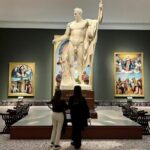








Milan Leonardo da Vinci Tours, compared.
 ★ 4.7Da Vinci’s Last Supper Guided TourFrom $7510,143 reviews
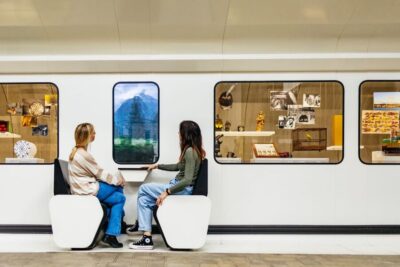 ★ 4.5Science and Technology Leonardo da Vinci Museum EntryFrom $157,169 reviews
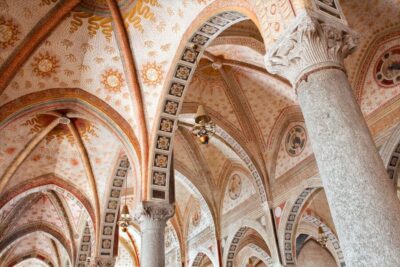 ★ 4.4Da Vinci’s Last Supper & Milan Sightseeing TourFrom $1121,997 reviews
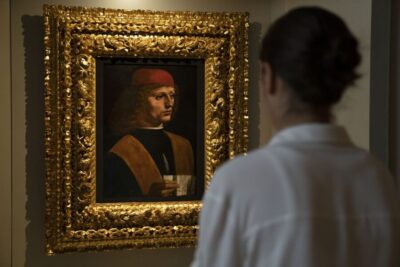 ★ 4.6Pinacoteca Ambrosiana & da Vinci Codex ExhibitionFrom $211,816 reviews
 ★ 4.5Best of Milan Experience Including Da Vinci’s The Last Supper and Milan DuomoFrom $1141,516 reviews
 ★ 4.6Guided Tour of Leonardo da Vinci’s ‘The Last Supper’From $931,281 reviews
 ★ 4.6Leonardo’s Last Supper Guided Tour685 reviews
 ★ 4.8Da Vinci’s Last Supper and Guided Walking TourFrom $70683 reviews
Browse the lists this tour appears in