
Review · VENICE DAY TRIPS FROM MILAN
Private Tour from Milan: Venice Full Day Trip by Train
Venice by train feels like a cheat code for your first day. You get the early start and then a smart, private walk that threads together the big sights and a few local-style stops. I like that the tour mixes iconic Venice, like the Grand Canal and Rialto, with quieter corners where you still get great stories. One thing to consider: this is a long day, and Venice can feel crowded fast around the most famous areas.
What makes this experience click is how it’s built for flow. The schedule gives you time at major photo and landmark points, and it also includes practical wayfinding stops like Strada Nova, which helps you move across town without wasting hours in tight alleys. If you get a guide like Sneh, Albi, Elshad, Mehmet, Dothan, or Dogan, you’re likely to get the kind of pacing that keeps the day from dragging.
The biggest practical drawback is also very Venice: the day can run long if trains slip, and the lagoon air can be intense near water. If you’re super picky about crowds or about taking crisp photos nonstop, you’ll want to plan for a bit of chaos.
Key things I think you’ll enjoy
- Private pacing: your guide can slow down for questions, shopping, and photo stops.
- Early Milan to Venice schedule: a morning departure helps you beat at least part of the day-trip crush.
- Strada Nova shortcut: you cover serious ground between major areas without constantly backtracking.
- Real Venetian working life: the squero in San Trovaso connects Venice’s romance with repair and craft.
- Plus a few modern surprises: Banksy at Campo San Pantalon adds a fun curveball.
- Return train built in: you’re not stuck figuring out timing at the end of the day.
From Milano Centrale at 7:30am to a full day in Venice
This trip starts at 7:30am at Milano Centrale (Piazza Duca d’Aosta, 1, 20124 Milano MI). You travel by train in 2nd class, and the full schedule clocks about 11 hours, with train time included. That timing matters. Venice rewards you for being there early, and it also limits the amount of time you waste on transit logistics.
A useful detail: the day before your tour, you should get a mail and a WhatsApp message with your train info. The tour uses a mobile ticket, and the train ticket is purchased 48 hours in advance. This setup is convenient because it reduces the amount of day-of fuss in Milan.
Do expect one rhythm: you’re moving most of the day. Each Venice stop is designed as a quick hit, usually around 30 minutes, with one longer stretch at the start by the canal area. If you’re the type who likes to linger for an hour in one place, this may feel a bit “see it, learn it, move on.” Still, private guiding helps you control your pace more than a big group ever could.
You can also read our reviews of more private tours in Milan
Canal Grande and St. Lucy: the start that sets the tone
After about 2.5 hours on the train, you begin in Venice with the Canal Grande area. The Grand Canal is Venice’s main water street and the city’s classic divider, running roughly four kilometers. Your guide frames it in a way that helps your brain understand what you’re seeing: canals function like roads, and bridges are your change of direction.
Stop 1 is also listed with time to look at the Sanctuary of St. Lucy. The big value here is context. From the start, you learn what makes Venice feel different from other Italian cities. It is not just landmarks, it is movement, crossings, and architecture packed into a compressed footprint.
One practical tip for the canal sections: bring a lens cloth. In real life, you can get misty spray on camera gear, especially when you’re close to the water. And yes, on some days, the lagoon air can smell strong. If that bothers you, plan to keep moving, and don’t let one foul-minute ruin your whole shot list.
San Giorgio dei Greci and the leaning bell tower story
Next is Chiesa di San Giorgio dei Greci, a stop that’s only short on the clock but rich in character. You’re looking at the campanile, often called the leaning clocktower, designed by Simone Sorella and completed in 1592. Your guide explains why it tilts, and that bit of engineering oddness is exactly the kind of detail that makes Venice feel lived-in rather than museum-like.
This bell tower and its adjoining church connect to Venice’s Greek community. The idea is straightforward but important: people built these spaces for sailors and merchants, not just for visitors. Even if you only have 30 minutes, this is the kind of stop where a good guide turns architecture into a human story.
Drawback to consider: if you walk in expecting a long interior visit, you might find the time tight. The stop is positioned as a landmark point with explanation, not a full church tour. Still, for a first-time Venice day from Milan, these quick anchor stops keep your bearings fast.
Strada Nova and Rialto: the shortcut plus the iconic hub
Then you move to Strada Nova, described as the widest street in Venice. This matters more than it sounds. Strada Nova was created in the 19th century to help pedestrians move quickly between Rialto and the railway station, tearing down buildings that would have forced you into a slower, more winding route.
In other words, this is your built-in “how to get around Venice without losing your mind” segment. You can feel the difference between tight medieval streets and a more direct pedestrian corridor. It’s not glamorous, but it is practical. And practical is what keeps you from spending your best hours dodging dead ends.
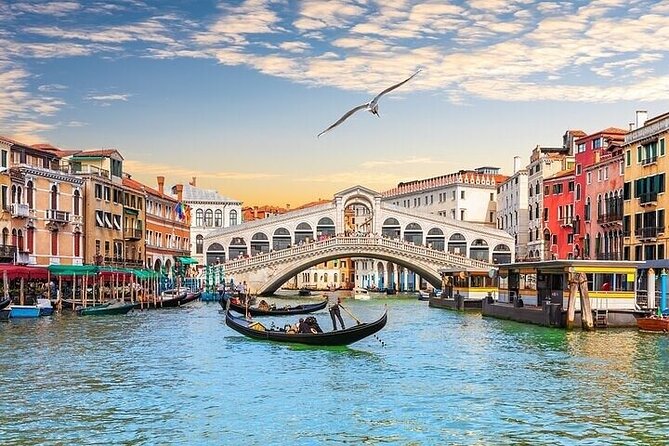
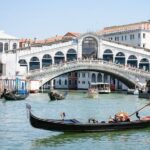
From there, you reach Ponte di Rialto. This bridge is the oldest of the four Grand Canal bridges and for years served as a major economic hub. Even if you’ve seen images of Rialto a hundred times, the point of this stop is to understand its role. Bridges are not just pretty, they’re choke points in Venice’s past, where business, movement, and crowds all met.
Photo tip: Rialto is busy. If you want clear shots, you’ll do better by shifting a little rather than trying to stand in one spot and wait for magic.
Piazza San Marco and the Bridge of Sighs, without getting trapped
Your next major anchor is Piazza San Marco. The square is famous for a reason, and the guide connects it to the big players around it. Your route includes St Mark’s Basilica area, with attention to the gold-ground mosaics that cover domes, vaults, and upper walls. Even in a brief stop, that’s the kind of visual “wow” that sticks with you.
The tour also points out St Mark’s Square in the broader European imagination. Napoleon Bonaparte described it as the most beautiful hall in Europe. You don’t need to accept the quote literally to get the point. It’s a grand stage for Venice’s power.
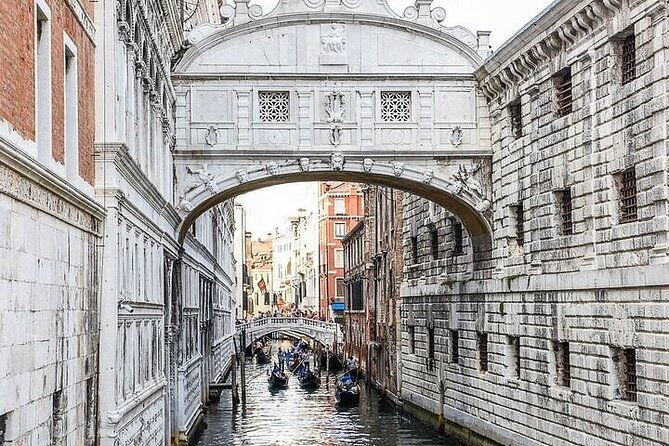
Then comes Ponte dei Sospiri, the Bridge of Sighs. You’ll learn it connects the Doge’s Palace to the historic prison and that it earned its nickname from a tradition of prisoners sighing at their last view of the world. The value here is tone shift. This is Venice romance with an edge. The bridge is a reminder that the city was also rules, courts, and punishment.
One reality check: Piazza San Marco areas can get packed quickly. That’s not the tour’s fault, it’s physics and popularity. If you hate tight spaces, plan to accept that this section is your busiest one.
A few more Milan tours and experiences worth a look

San Zaccaria, Ponte dell’Accademia, and San Trovaso’s gondola workshop
After the big-sight stretch, you get a slightly calmer church stop at Chiesa di San Zaccaria. The church traces back to a former monastic church and the present building is dated 1458 to 1515. The facade blends late-Gothic and Renaissance styles, and your guide helps you read those shifts without turning it into an art-history lecture.
Next is Ponte dell’Accademia, one of only four bridges over the Grand Canal. It crosses near the southern end of the canal and is named for the Accademia di Belle Arti di Venezia. This is another “look, orient yourself, then move on” stop. Bridges are your map in Venice, and each one teaches a little geography.
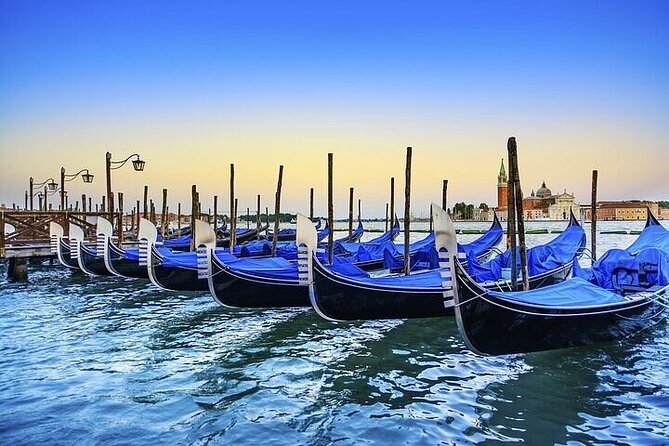
Then the day gets interesting in a non-postcard way at Squero di San Trovaso. This squero is one of the oldest and most famous, and it’s described as a classic shipyard where small boats like gondolas are repaired. You can get a peek at how a gondola is made or repaired.
This is one of the most praised elements you’ll see in the value pattern of the tour style. When a guide includes working craftsmanship, your day feels less like sightseeing and more like understanding how Venice keeps going.
Campo San Pantalon Banksy spot and Santa Margherita’s student vibe
The tour then steps into a modern cultural detour at Campo San Pantalon, where you can admire the Banksy painting often referred to as the shipwrecked/migrant child. Even if you don’t care about street art, the practical point is that it shows how Venice keeps layering newer stories onto older spaces.
After that is Campo Santa Margherita in the Dorsoduro area. It’s near university buildings and works as a gathering place, especially with students at the end of the day. That matters because it shifts the tone from monuments to everyday life. This is where Venice feels more like a city you could live in, not only a city you photograph.
Timing note: this segment is about 30 minutes. It’s enough to take in the vibe, grab a quick coffee if you find one nearby on your own, and then be ready for the final transit back toward the edge of the city.
Piazzale Roma: where the city meets the road, then back to Milan
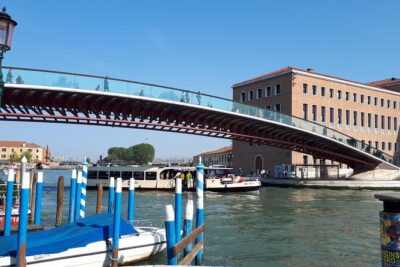
Your last stop is Piazzale Roma, which is basically the entrance to Venice at the end of the Ponte della Libertà. It’s also the point where you notice how unusual Venice is: Piazzale Roma and nearby Tronchetto are the only parts of Venice’s insular core accessible to regular ground vehicles like cars and buses.
This is a smart ending. By the time you reach Piazzale Roma, you’ve walked enough canals and bridges that the return train feels like a release. The tour ends back at the meeting point, with the train ride taking about 2.5 hours back to Milan.
If your goal is to maximize Venice time while staying sane about the exit plan, this return arrangement helps. You don’t have to find your own route back through the maze.
Price and value: is $391.34 per person worth it?
At $391.34 per person, this is not a budget day trip. But it can make sense if you value three things the tour is set up to deliver: a private guide, train logistics done for you, and a structured route.
Here’s what you’re paying for, specifically:
- Private guided tour
- Transport by train in 2nd class (about 2.5 hours each way)
- Venice visitor fee
Food and drink are not included, so you’ll plan for lunch and snacks on your own. That’s normal for Italy, but it does affect your total day cost. If you keep it simple with one meal plus water, you can stay in control.
When this price feels right:
- You want the guide to help you connect the dots between stops, instead of just collecting photos.
- You care about pacing and customization. Some guides in past days have worked hard to match interests, steer away from tourist traps, and handle practical details like shopping pauses and carrying purchases.
- You’re going early and want someone to reduce wasted walking time.
When it might not:
- If you only care about a few classic landmarks and would rather go unguided, you could likely spend less.
- If you’re extremely sensitive to crowds and odor near water, Venice will still be Venice. A private tour may reduce the worst bottlenecks, but it cannot erase popularity.
The real-world experience: pacing, crowds, and guide quality
The tour runs in all weather conditions. That’s important because Venice can swing from sunny to damp fast, and you do not want your day scrapped. A private guide also helps you choose what to prioritize when the conditions are less than ideal, like when you’re trying to balance photography and comfort.
Based on guide names and what has been praised, the best-case version looks like this: a guide with strong command of local context, good communication, and a habit of avoiding obvious tourist traps. Past guides named in positive feedback include Sneh, Albi, Elshad, Mehmet, Dothan, and Dogan. You can also see a theme of making time for shopping, and even grabbing a good lunch when the schedule allows.
Still, I would be honest about risk. One negative review mentioned a guide who did not speak English well, and another complained the day felt very crowded and that water smell made pictures hard. Those are not tiny issues if they hit your personal tolerance level.
My practical suggestion if you’re picky:
- In your booking messages, ask for confirmation that your guide will communicate in English well.
- Bring a small plan for photos, like deciding which 2-3 stops are your must-shots, then letting the rest be about learning and orientation.
Should you book this Milan to Venice private train day trip?
Book it if you want a structured first visit to Venice that avoids the hardest parts of figuring things out. The private pacing, the mix of major sites like Rialto and Piazza San Marco, plus the craft stop at Squero di San Trovaso, gives you a day that feels like more than a checklist.
Skip it or adjust your expectations if you hate crowds, you cannot handle long walking days, or you want a slower, sit-down Venice with long museum time. This itinerary is built for movement and highlights, not for hours of quiet immersion.
If you’re okay with that tradeoff, this is a solid way to do Venice in one go, with the kind of guide support that can make the city make sense fast.
FAQ
How long is the Venice full day trip from Milan?
It runs about 11 hours total, including train travel time. The start time in Milan is 7:30am and the train rides are about 2.5 hours each way.
Where do I meet in Milan, and where does the tour end?
You meet at Milano Centrale, Piazza Duca d’Aosta, 1, 20124 Milano MI, Italy. The activity ends back at the same meeting point.
Is the tour private, and what language is it offered in?
Yes, it is a private tour. It is offered in English.
What does the price include?
The price includes a private guided tour, transport by train in 2nd class, and the Venice visitor fee. Mobile ticketing is part of the process.
Is food included during the tour?
No. Food and drink are not included.
How are the train tickets handled?
The tour operator purchases the train ticket 48 hours in advance. Your train ticket details are sent to you by email and via WhatsApp the day before.
What is the cancellation policy?
You can cancel for a full refund up to 24 hours before the experience start time. If you cancel less than 24 hours before, the amount paid will not be refunded.
More Private Tours in Milan

More Tours in Milan
More Tour Reviews in Milan

Not for you? Here's more nearby things to do in Milan we have reviewed





Venice Day Trips from Milan, compared.
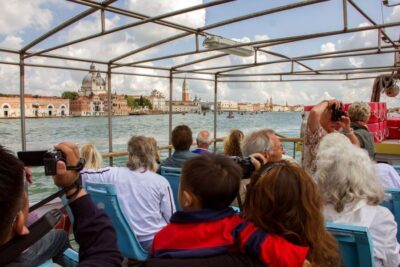 ★ 4.4From Milan: Day Trip to Venice with Guided City TourFrom $146614 reviews
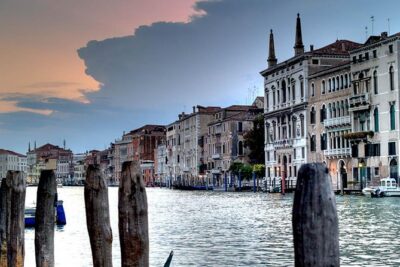 ★ 4.0Venice Day Trip from Milan with Guided City TourFrom $157383 reviews
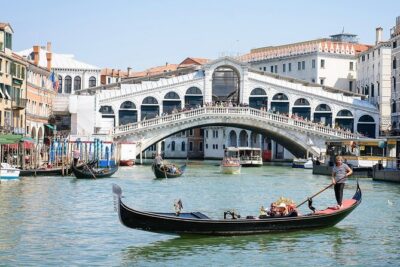 ★ 4.5From Milan: Venice Full-Day Guided Tour With Boat RideFrom $204322 reviews
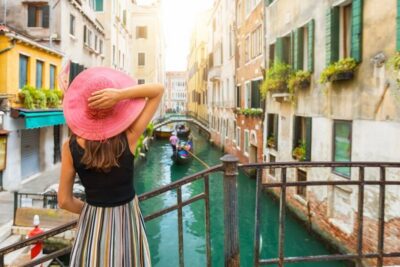 ★ 4.1From Milan: Venice and Verona Full-Day Tour by TrainFrom $180217 reviews
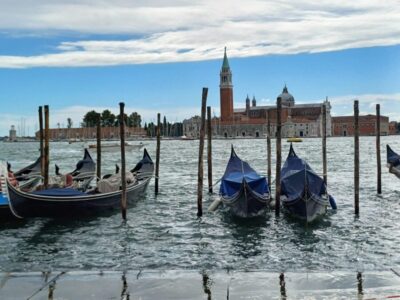 ★ 4.5From Milan: Venice City Highlights Guided Day TripFrom $162139 reviews
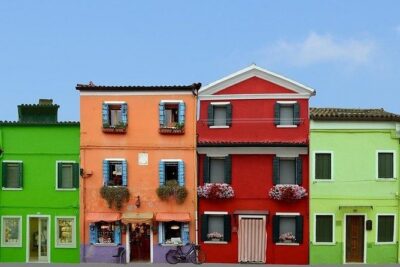 ★ 4.5Venice and Verona Full Day Tour by Train from MilanFrom $192131 reviews
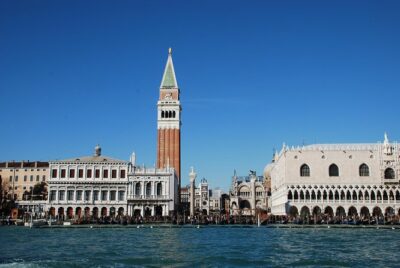 ★ 4.0Venetian Wonders: Day Trip to Venice from BergamoFrom $11916 reviews
 ★ 4.5Venice Full Day tour from Milan by high speed train. Small GroupFrom $99911 reviews
Browse the lists this tour appears in