
Review · VENICE DAY TRIPS FROM MILAN
Private Full Day Tour from Milan to Venice with local tour guide and fast train
Venice works best when you arrive with a plan. This day trip pairs fast trains with a private local guide so you spend less time figuring things out.
I like that the morning is structured, so you get your bearings fast around St. Mark’s and Rialto. I also like the afternoon freedom, so you can wander canals at your own pace.
The potential snag is practical, not scenic. On at least one booking, a group of 13 was split across different train cars, even though the tour was meant to stay together. It’s worth asking what to expect for seats if you’re traveling in a larger group.
Key things to know before you go
- Direct fast roundtrip trains: second class tickets included, plus the route starts and ends at Venice Santa Lucia
- 3 hours with a local guide: a focused walking plan for the big hits, not a slow sightseeing shuffle
- Some admissions are extra: Doge’s Palace and St. Mark’s Basilica are not included in the listed stops
- Afternoon independence: lunch is on your own, then you roam the canals and backstreets
- A possible day-visitor access fee: on certain dates, you may need to pay a €5 access fee if you’re staying outside Venice
Milan to Venice without the stress: how the train day really works
This experience is built for a very simple goal: get you from Milan to Venice and back with minimal hassle. You take a high-speed train in the morning, meet your guide after you arrive at Venezia Santa Lucia, and then you’re on foot in Venice for the guided part.
The day runs about 8 hours total. That includes the train time plus a planned morning walking tour with an official guide for 3 hours in Venice. You then get free time in the afternoon, with lunch not included, so you can choose what fits your taste and budget.
The value here is not just the sightseeing. It’s the structure. In a city where lines and crowd flow can drain your energy, a timed plan plus a local guide can keep the day feeling light.
The morning plan: fitting St. Mark’s, Rialto, and more into 3 hours
The guided portion is a walking tour designed to cover the top sights quickly, without turning into a marathon. Expect a route that focuses on Piazza San Marco, the Rialto Bridge area, and key landmarks around St. Mark’s Square and the Grand Canal area.
You’ll also hear practical tips from the guide, which matters more than people think. Venice can be confusing if you’re relying only on maps. A good guide helps you understand where the main lanes are, where alleys lead you into dead ends, and which directions make it easier to return when you’re done exploring.
One thing to keep in mind: this is a private tour, meaning your group participates together with your guide. Still, train car seating can be handled separately by the rail system, so you may want to ask about keeping everyone in the same car if your group is large.
Piazza San Marco: what to notice first in Venice’s main square
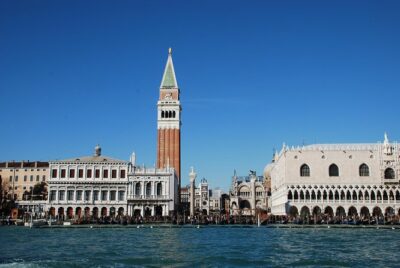
Your first stop is Piazza San Marco, Venice’s most famous square and the natural launching point for most first-time visits. The plan includes sightseeing with your official tour guide, with admission listed as free for this stop in the route.
Here’s what you should look for as you arrive. Don’t only scan for the big postcard buildings. Pay attention to how the square is laid out, the arcades around the edges, and the way it funnels foot traffic toward the major sites. It’s the kind of space where understanding the layout makes the rest of Venice feel easier.
This is also where the story of Venice feels tangible. St. Mark’s area is tied to centuries of power and pride, and your guide can point out details that you would likely miss if you were just drifting around. A standout from the guides on this kind of route is how they handle introductions, like explaining what you’re seeing and why the buildings are where they are.
Rialto Bridge and the Grand Canal feel in 15 minutes
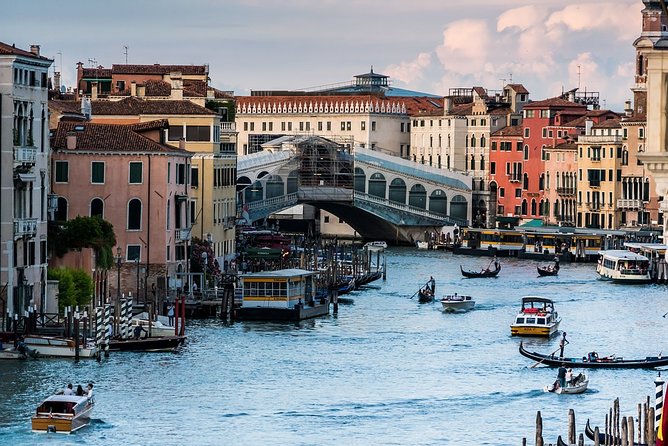
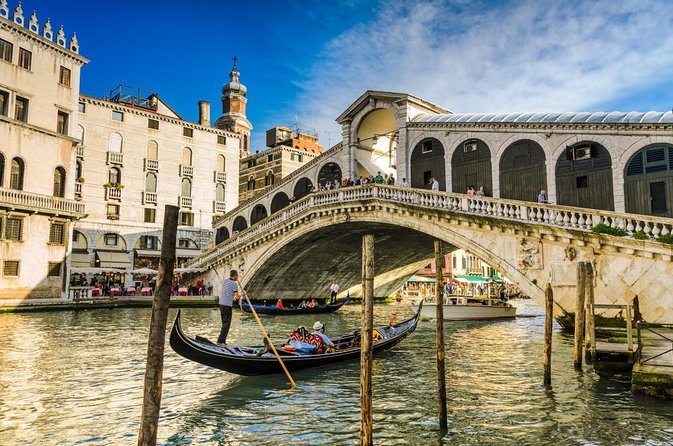
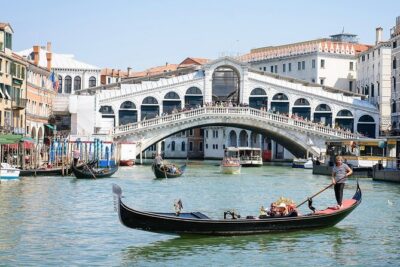
Next up is Ponte di Rialto, the bridge that crosses the Grand Canal. It’s described as one of the most beautiful bridges in Europe, originally built in 1593 and restored multiple times since then. In the plan, this stop is 15 minutes, with admission listed as free.
Fifteen minutes sounds short, but it’s usually enough to do the essentials right: get the best viewpoints, understand the bridge’s role as a canal crossing, and capture the shape and rhythm of the waterfront streets. You also get context for why Rialto is still central to Venice’s identity as a trading and meeting point.
The main drawback of a quick stop is obvious. If you’re the type who likes to linger for photos until the light turns perfect, you may want extra time after the tour ends. The good news is that once you’ve seen Rialto from the key angles, you can return later when your legs and timing are better.
Doge’s Palace: big medieval presence, with tickets not included
Then you’ll head to Doge’s Palace, described as the largest and best-preserved medieval building in Europe and a UNESCO World Heritage Site. The stop is listed for 15 minutes, and admission is not included.
This matters because Doge’s Palace is the kind of place that can turn into a long visit if you let it. Since admission is extra, you have two sensible options:
- If you’re happy with exterior views and orientation, you can stay within the time window.
- If you want the full interior experience, plan to add tickets and accept that your afternoon might become a bit more rushed.
Even without stepping inside, Doge’s Palace helps you understand the power architecture around St. Mark’s Square. It’s a landmark you’ll keep recognizing as you walk, and that recognition makes your self-guided wandering afterward more rewarding.
St. Mark’s Basilica: the icon, and the part that costs extra
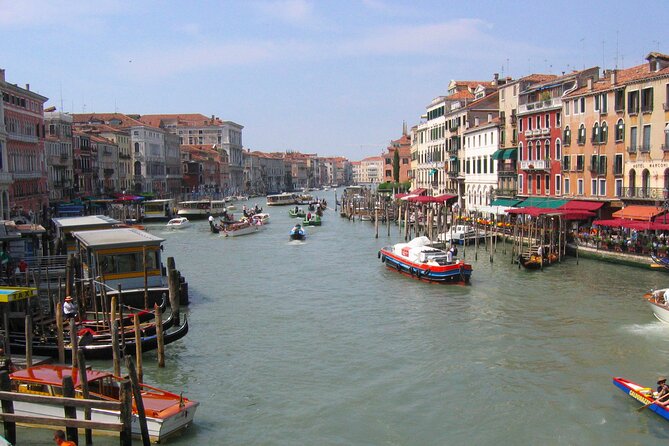
Your itinerary also includes Basilica di San Marco with admission not included, and a stop time of 20 minutes. This is Venice’s signature cathedral, and it’s a huge part of why St. Mark’s Square feels like a whole destination, not just a meeting point.
Since tickets and entry are not included, the best approach is to think about your priorities. If you’re set on going inside, you’ll want to line up the extra expense and time needs. If you’re more interested in street-level Venice, you can still use the stop as a high-impact introduction and then decide what you want later.
A practical note: St. Mark’s Basilica is a major magnet for crowds. So even if the stop itself is scheduled, the real experience depends on how entry lines and crowd flow are moving that day. Your guide can help you make quick decisions in the moment so you don’t get stuck feeling frustrated.
Ponte della Costituzione: a bonus bridge stop with an interesting history
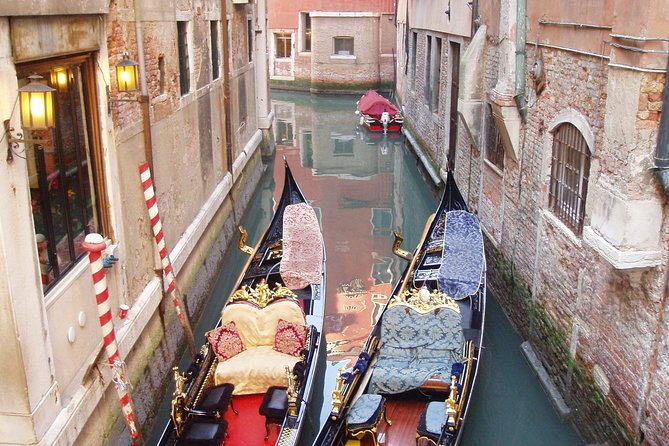
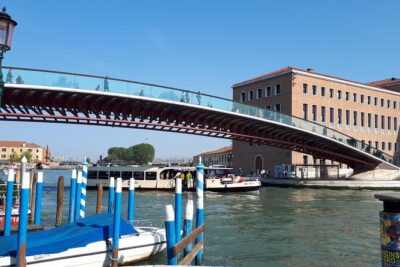
The itinerary also mentions Ponte della Costituzione, described as the oldest of the four bridges in Venice. It was built in 1884, took 4 years to complete, and had a total cost of over 500,000 lira. The plan also notes that construction used an innovative system of floating pontoons, designed by engineer Luigi Scaglia.
This bridge is also flagged as being in not-very-good condition historically, with renovation only completed in 2004. That kind of detail is exactly the sort of thing a guide can toss in that turns a random bridge sighting into something you actually remember.
Whether this stop feels like a highlight or a quick photo break depends on your interest in design and engineering. If you like understanding how Venice’s infrastructure works, you’ll probably enjoy it.
Lunch on your own and the afternoon wandering strategy
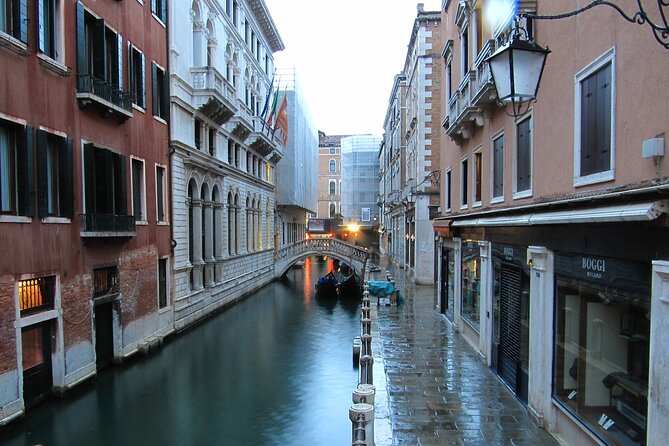
After the guided morning, you return to independent time in the afternoon. Lunch is not included, so you choose where to eat, and you spend the rest of the daylight exploring Venice at your own pace, especially along canals.
This part of Venice is where you can win big if you plan lightly. Your best move is to pick a direction, not a checklist. Use the morning tour to learn the neighborhood flow, then let the streets pull you toward small squares and water edges.
One practical choice you’ll face is how tourist-heavy areas compare to quieter side lanes. St. Mark’s and Rialto are the obvious magnets. The payoff comes when you step away from the biggest routes and find calmer canal corners. The morning guide time helps you do that without wasting hours.
Also, keep in mind that Venice is all about walking, and you’re doing trains plus guided steps plus independent steps. If you’re the type who gets sore feet early, plan for breaks and don’t assume you’ll cover everything you see on a map.
Price and value: what $523.60 gets you in the real world
At $523.60 per person, this is not a budget day trip. But it’s priced like a premium “low stress” format, combining fast trains, an official guide for 3 hours, and a private tour setup.
Here’s how to think about the value:
- You’re paying for time savings and stress reduction. Direct high-speed train travel plus a guide waiting at Venezia Santa Lucia reduces the chances of delays or confusion.
- You’re paying for curation of the day. Three hours with a local guide can save you from spending your best morning figuring out what to see first.
- You’re paying for flexibility later. Once you understand the layout from the guided stops, your afternoon wandering gets easier.
Where the price might feel less justified is if you’re the type who already knows Venice well, or if you plan to skip major sights like Doge’s Palace or Basilica entries. Since some admissions are not included, your total day cost could rise depending on what you choose to go into.
Still, if your goal is to maximize key sights without burning your day on logistics, this format can feel worth it. It’s especially helpful for first-timers or anyone who simply hates train transfers and waiting around.
Train seating and group size: a real-world caution
One note from real-world experience is important if you’re traveling with a group. In one case involving a party of 13, travelers were placed on separate train cars, even though the booking was meant to keep the group together.
That doesn’t mean it will happen to you. It does mean you should manage expectations and, if you can, ask the operator what they can do about seat grouping or car assignments. For many travelers, it’s not a deal breaker. But if you’re traveling with family members who want to stay together, it’s worth checking before you settle in.
Who should book this day trip, and who might prefer something else
This tour is a good fit if you:
- Want fast train convenience from Milan instead of juggling slower routes
- Like a plan that covers the big sights quickly, then gives you room to roam
- Appreciate having a guide who can share the quick practical stuff, like dining and shopping recommendations
It may be less ideal if you:
- Want a long, slow museum-style visit. This tour is structured around brief stops and a guided walking flow.
- Are very budget-focused, since admissions for Doge’s Palace and St. Mark’s Basilica are not included, and lunch is on your own.
- Are extremely photo-driven at every stop, since some sights are timed tightly.
The guide factor: Barbara and Cristina set the tone
A strong reason to choose this style of day trip is the human side. In the experiences shared, guides like Barbara and Cristina were praised for being personable and helpful, with guides who know how to explain what you’re seeing in a way that makes the city feel clearer instead of overwhelming.
That kind of guide quality is what makes a short morning tour feel satisfying rather than rushed. You’re not just walking from one monument to the next. You’re building a mental map of Venice.
Should you book? My decision guide
If you want the Venice highlights with minimal friction, I’d lean yes. The combination of fast roundtrip trains, a 3-hour guided walk, and afternoon free time is the right formula for many first-timers.
I’d hesitate only if you strongly prefer a fully self-guided Venice day or if you want guaranteed in-group train seating for a larger party. If that matters, ask questions up front and confirm what you can about train car assignments.
Bottom line: book this when you want a smart structure, not when you want maximum wandering time in the very beginning.
FAQ
How long is the tour from Milan to Venice?
The total duration is about 8 hours.
Where do we meet in Venice?
You meet at Stazione di Venezia Santa Lucia, address 30121 Venice.
Is the train ticket included, and what class is it?
Yes. Fast roundtrip train tickets in second class from Milan to Venice are included.
How long is the guided walking tour in Venice?
The official tour guide time in Venice is 3 hours.
Are admission tickets included for Doge’s Palace and St. Mark’s Basilica?
No. Admission is not included for Doge’s Palace and Basilica di San Marco. Piazza San Marco and Ponte di Rialto are listed as free in the tour stops.
Is lunch included?
No. Food and drinks are not included, and lunch is for you to arrange on your own.
Is the tour truly private?
Yes. It’s described as a private tour/activity, meaning only your group participates.
Is there a €5 access fee for Venice?
On certain dates, day visitors staying outside Venice may need to pay a €5 access fee. You can check applicable days and exemptions at https://cda.ve.it.
Venice Day Trips from Milan, compared.
 ★ 4.4From Milan: Day Trip to Venice with Guided City TourFrom $146614 reviews
 ★ 4.0Venice Day Trip from Milan with Guided City TourFrom $157383 reviews
 ★ 4.5From Milan: Venice Full-Day Guided Tour With Boat RideFrom $204322 reviews
 ★ 4.1From Milan: Venice and Verona Full-Day Tour by TrainFrom $180217 reviews
 ★ 4.5From Milan: Venice City Highlights Guided Day TripFrom $162139 reviews
 ★ 4.5Venice and Verona Full Day Tour by Train from MilanFrom $192131 reviews
 ★ 4.0Venetian Wonders: Day Trip to Venice from BergamoFrom $11916 reviews
 ★ 4.5Venice Full Day tour from Milan by high speed train. Small GroupFrom $99911 reviews
Browse the lists this tour appears in