
Review · MILAN SFORZA CASTLE TOURS
Milan: Sforza Castle and Michelangelo’s Pietà Rondanini Tour
Sforza Castle has secrets in plain sight. I love how this tour pairs the Sforza Castle setting with a focused, human look at Michelangelo’s Pietà Rondanini, so you do not just see famous art, you understand what it meant at the end of Michelangelo’s life. I also like the castle pace, it moves from defensive architecture to ducal courtyards without feeling like a rushed checklist. One possible drawback is the total time is just 1.5 hours, so you need to accept that you will not linger long in every museum room.
What makes it work is the way your guide stitches the pieces together. Guides like Giorgio, Simone, Fabio, and Stefania are repeatedly praised for explaining context clearly, keeping questions moving, and making you notice details you would miss on your own. If you are picky about audio, one caution, a past guest noted the earphones were inconsistent at times, so still listen for your guide and not just the audio.
Key moments that make this tour worth it
- Pietà Rondanini in context, the unfinished marble worked on until days before Michelangelo died at 89
- Ducal Courtyards and Renaissance spaces, including the Corte Ducale and Cortile della Rocchetta
- Ludovico il Moro meets the artwork, so the castle is not just walls and statues
- Leonardo da Vinci inside the fortress, where he lived and worked for nearly 20 years
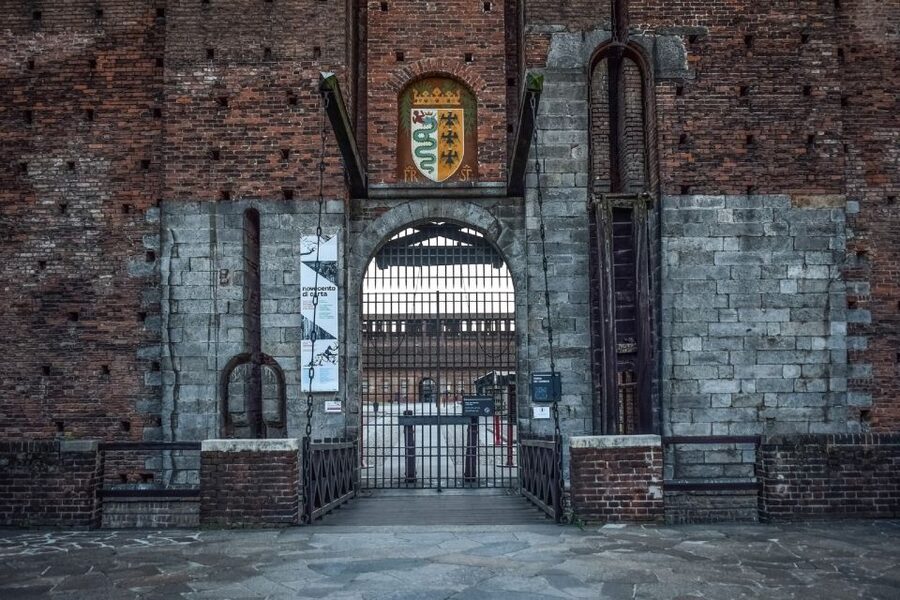
- Symbols with bite, like the Biscione serpent coat of arms and what it signaled politically
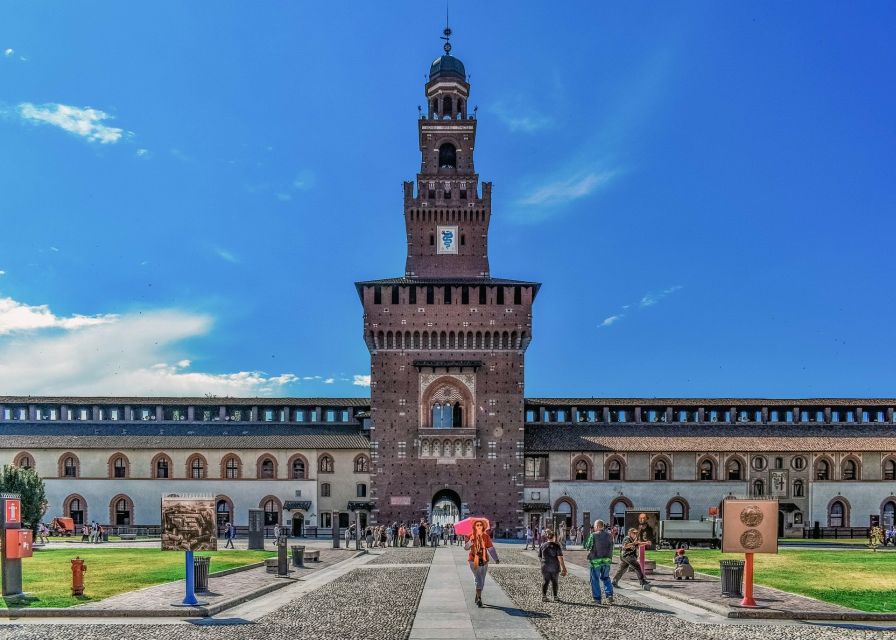
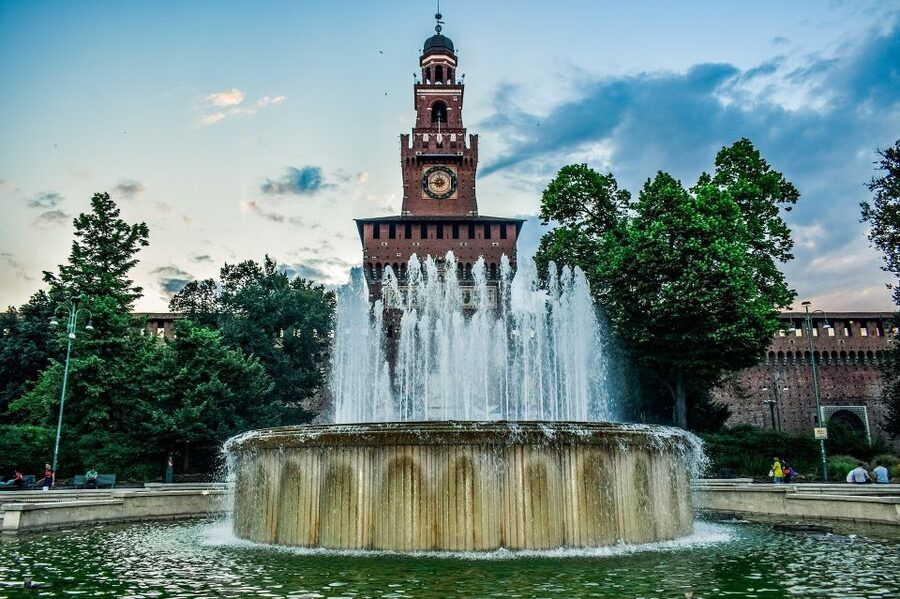
Meeting in Piazza Castello, right under the Filarete clock tower
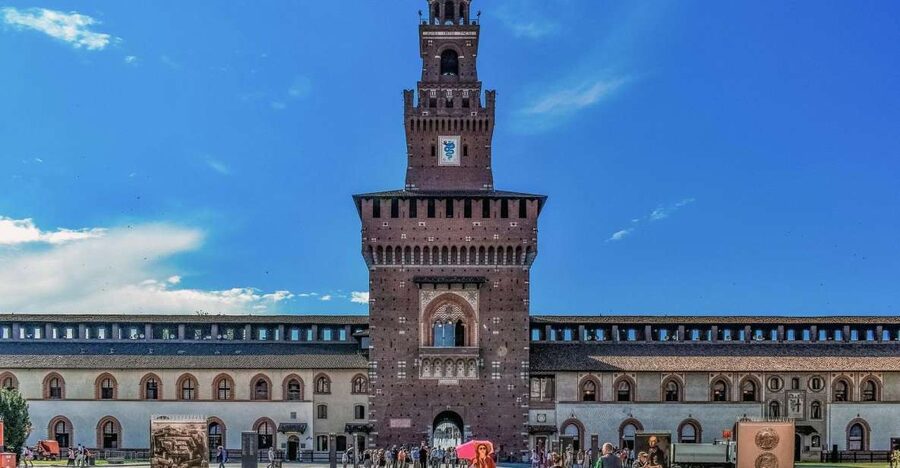
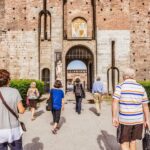
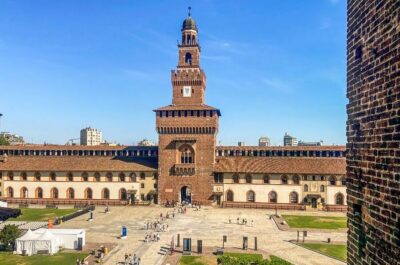
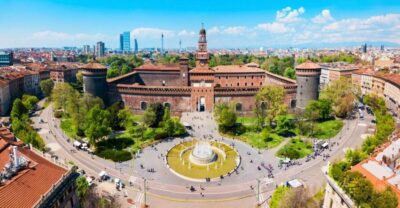
I like starting points that are easy to spot, and this one is. You meet in Piazza Castello, under the Filarete clock tower, directly in front of Sforza Castle, and you do not enter into the courtyards at the meeting point.
The guide you find should carry a Hidden Experiences purple flag or board. This matters because the castle complex is big, and you want your first 5 minutes to be stress-free.
Also, this is a timed tour, so arrive a little early. Even a short delay can cut into the art time, and that is the whole point of doing this guided version rather than wandering.
You can also read our reviews of more tours and experiences in Milan.

Entering Sforza Castle without wasting time
A lot of the value here is simple, you get seamless entry with entrance fees included. That means you can spend your energy on what to look for, not on ticket lines and figuring out which museum rooms connect best.
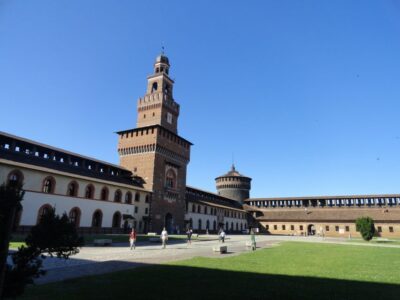
Sforza Castle itself is imposing, one of the major defensive strongholds in Europe. In this short format, you get the story arc from medieval power to Renaissance court culture, which is exactly what you want near Milan’s Duomo.
If you like architecture, you will enjoy how the guide points out the castle as a working political machine, not just a pretty place to take photos. Courtyards are where the whole idea becomes visible, because you can feel how people moved, showed status, and projected control.
Michelangelo’s Pietà Rondanini, why the unfinished work hits harder
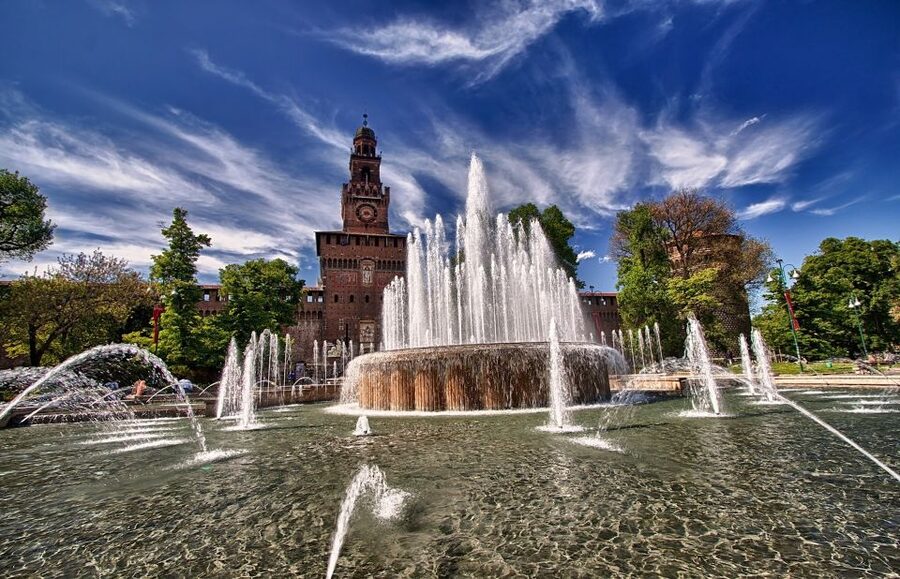
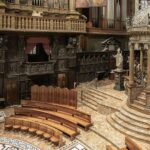
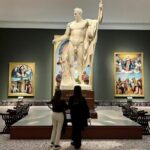
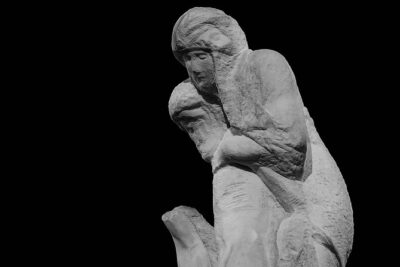
Your first big stop is the Pietà Rondanini, housed in an evocative museum space within the castle. This is not Michelangelo at his most polished. It is his final, unfinished testament, the marble block he worked on until just a few days before his death at age 89.
I love how your guide frames it as urgent, not incomplete. The figures are elongated, the texture stays raw, and that “non-finito” look communicates something more modern than you might expect from a Renaissance sculpture. When you understand that Michelangelo was working right up against his own mortality, the emotional pull becomes clearer.
Here is what you should actively do, take your time with the angles of the bodies. The way the forms stretch and do not resolve completely is part of the message. Your guide will point out how Michelangelo seems to prioritize spiritual urgency over anatomical perfection, so you can stop judging it by early-career standards.
This is the kind of art stop that changes how you see later “finished masterpieces,” because it shows you how craft and meaning can conflict in the same block of stone.
Duornly courtyards and ducal power, Ludovico il Moro’s Milan
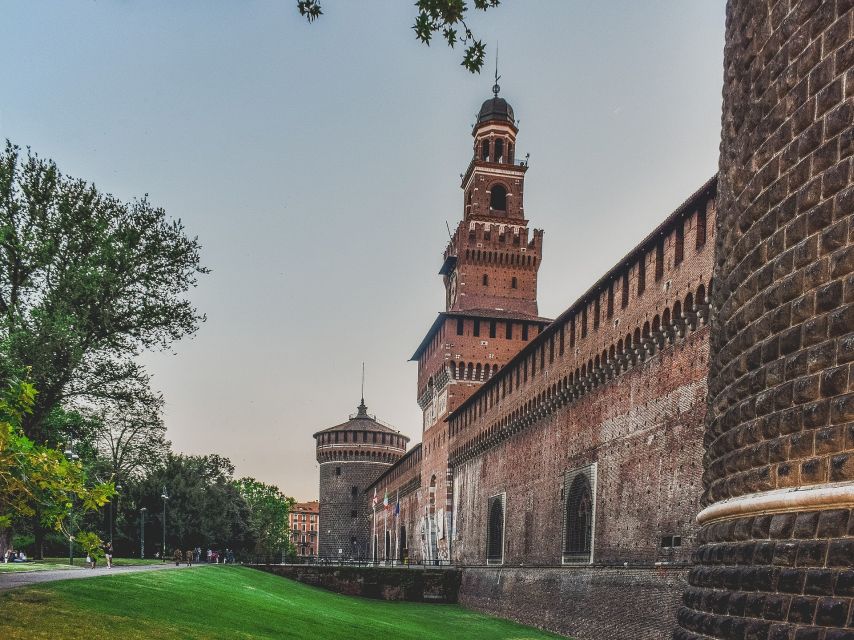
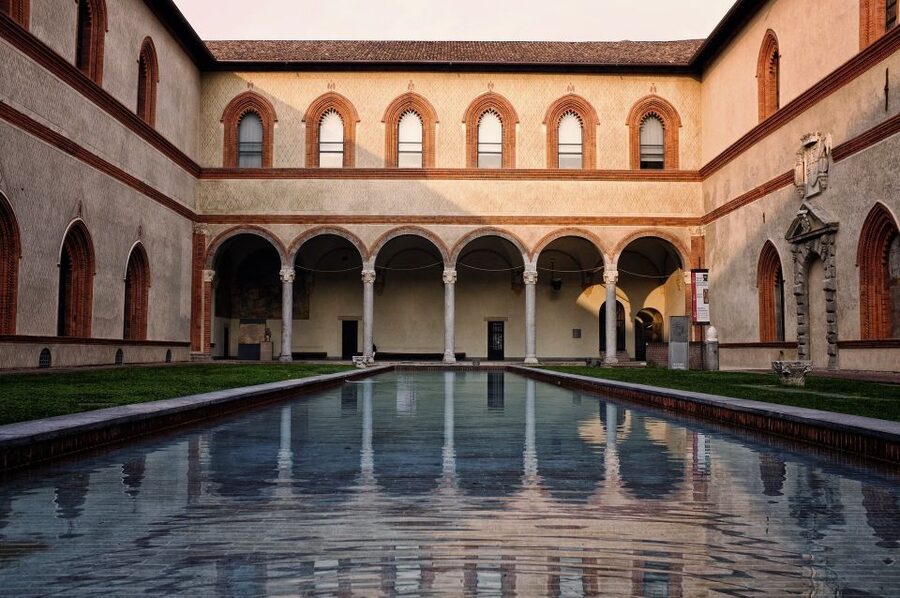
After the Pietà, you shift to the Ducal Courtyards, including the Corte Ducale and the Cortile della Rocchetta. This is where the tour stops being purely art history and starts feeling like political history you can stand inside.
You will hear the story of Ludovico il Moro, the court figure who turned Milan into something close to a Renaissance stage. The guide’s job is to connect what you see in stone to what was going on inside power circles, and that connection is the magic trick of a good short tour.
I also like that the symbolism is explained in plain language. You will get the meaning behind the Biscione serpent coat of arms, and you will learn how it functioned as a political signal, tied to identity and authority. When you know what symbols were meant to communicate, you start noticing them everywhere you look.
Where Leonardo da Vinci fits, living and working in the castle
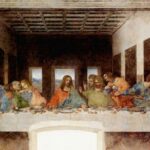
Yes, Leonardo is often linked to The Last Supper. But in this tour, you get the quieter, more practical side of him: his role as a court engineer and architect.
Your guide will explain that Leonardo lived and worked in the castle for nearly 20 years. That changes how you think about his genius, because it reminds you that he was not only an artist. He was also embedded in the demands of a powerful family and a serious political environment.
As you move through the castle spaces, your guide points out traces of Leonardo’s influence and his complex relationship with the Sforza family. Even in 1.5 hours, that context helps you understand why a fortress could be both a military machine and an art-and-ideas hub.



The Visconti and Sforza stories you actually remember
One reason this tour has such a strong reputation is storytelling with specifics. You are not just hearing names. You are hearing why the Visconti and Sforza families mattered, and how their power shaped what Milan became.
The guide will share everyday court life details and intrigue, including the roles of noblewomen and ambitious men. This is the part that makes the castle feel less like a museum and more like a place where decisions were made, alliances formed, and reputations built or destroyed.
You’ll also spend time under the shadow of the Filarete Tower, where the guide explains how the castle survived centuries and why it became a Milan identity symbol. It is a good reminder that preservation is not just luck. It is tied to the way rulers, politics, and cities decide what to keep standing.
How the 1.5-hour format works for you
This is a short tour by design, and it works if you want the big picture fast. The payoff is strong because the Pietà Rondanini stop is specific, then you get the courtyards and the Leonardo context in a coherent flow.
But be realistic. If you want to spend 45 minutes alone studying every artwork in the surrounding museum rooms, the time may feel tight. One practical strategy is to let the guide lead you to the key viewing angles, then do one quick personal re-check once you understand what you are looking at.
Audio is included, and headphones are provided when the group has 11 participants. Some guests have noted earphones can be imperfect at times, so I suggest you position yourself so you can still see your guide and catch gestures and pointing.
In hot months, use the tour pace to your advantage. One guide was praised for timing shade and breezy spots, which matters in Milan when the sun hits the stone.
Price and value, why $47 can make sense here
At $47 per person for about 1.5 hours, you are paying for three things that are hard to DIY well: entry management, an expert guide, and focused interpretation of one of Michelangelo’s most emotionally intense works.
You could wander the castle on your own. But without guidance, you might miss how the Pietà Rondanini’s unfinished quality connects to Michelangelo’s end-of-life mindset, and you might not connect Leonardo’s presence to specific spaces within the complex.
You also get small-group attention. A number of people describe groups as tiny, including cases as small as 3 or 4. That size is a big deal in places where everyone wants to ask questions without turning the tour into a loud train platform.
So for me, this price is fair if you care about meaning, not just highlights. If you only want quick photos, you might find it unnecessary. If you want to leave with a clear story about Milan’s ducal power and Renaissance art, it is a solid value.
Should you book this Milan tour?
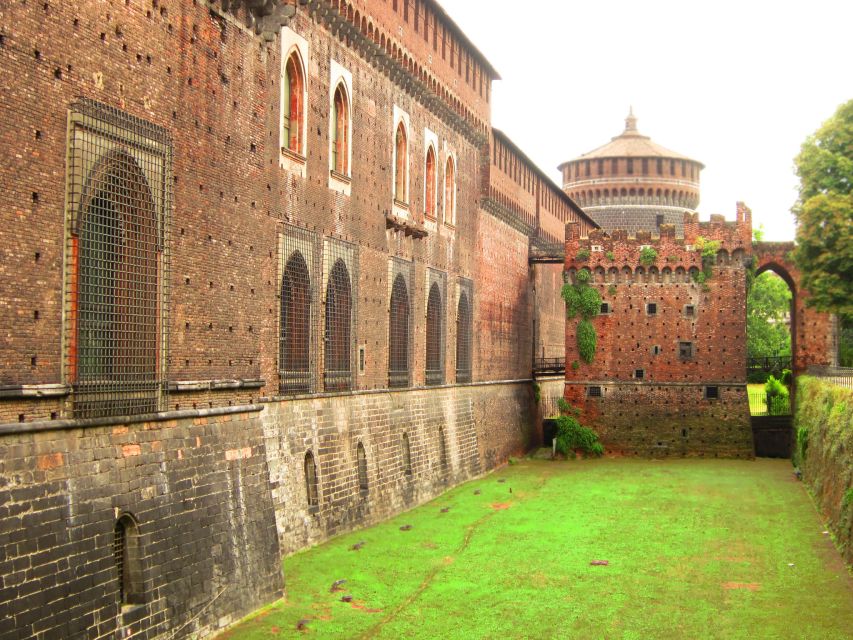
Book it if you want a focused, guided introduction to Sforza Castle that does not treat Michelangelo as a random sculpture stop. You’ll get the human context for the Pietà Rondanini, then you’ll see how the ducal court world connected to Leonardo’s time inside the fortress.
Skip it if you plan to do long museum wandering and you hate time limits. Also consider it less if you depend on audio clarity above all else, since there is at least one note about earphones working intermittently.
If you are doing Milan in a hurry, this tour is a great way to get more “why” than “what,” and it helps the castle and the art stick in your memory long after you walk back toward the Duomo.
FAQ
Where is the meeting point for the tour?
Meet the guide in Piazza Castello, under the Filarete clock tower, in front of Sforza Castle. The guide meets you outside the courtyards.
How long is the guided experience?
The tour lasts 1.5 hours.
What is included in the price?
The tour includes entrance fees to the castle and museum, a certified tour guide, headphones when the group has 11 participants, and a small group guided tour.
What languages are available?
Tours are available in Italian, English, German, French, and Spanish.
Is the tour wheelchair accessible?
Yes, the tour is wheelchair accessible.
Is there free cancellation?
Yes. You can cancel up to 24 hours in advance for a full refund.
More Tours in Milan

More Tour Reviews in Milan
Not for you? Here's more nearby things to do in Milan we have reviewed









Milan Sforza Castle Tours, compared.
 ★ 4.0Sforza Castle Entry Ticket with Digital Audio GuideFrom $152,675 reviews
 ★ 4.6The Last Supper & Sforza Castle Guided TourFrom $97610 reviews
 ★ 4.6Last Supper and Sforza Castle Guided TourFrom $112498 reviews
 ★ 4.5Sforza Castle and Michelangelo’s Pietà Rondanini guided experienceFrom $60220 reviews
 ★ 4.5The Last Supper and Sforza Castle Tour – group tourFrom $106151 reviews
★ 4.5The Last Supper & Sforza Castle Guided TourFrom $104128 reviews
★ 4.5The Last Supper and Sforza Castle Tour – group tourFrom $106151 reviews
★ 4.5The Last Supper & Sforza Castle Guided TourFrom $104128 reviews
 ★ 4.6Last Supper and Sforza Castle TourFrom $88115 reviews
 ★ 4.9Duomo, Sforza Castle, and Pieta Guided TourFrom $66100 reviews
Browse the lists this tour appears in