

Review · CITY TOURS
e-Scavenger hunt Milan: Explore the city at your own pace
Milan can feel big, noisy, and a bit intimidating on your first day, so this app-led scavenger hunt is a smart way to see the highlights at your own pace. You follow a family-friendly game on your phone and work through questions and short research tasks as you move from major landmarks to historic corners.
I especially like two things: the mobile game format keeps you moving without feeling like a rigid tour, and it’s set up so all ages can play along.
The main drawback to consider is practical, not artistic. You’ll need a smartphone with data for the app, and one unhappy review I saw said the instructions were not great, with parts of the experience feeling incomplete.
Key things to know before you start

- Self-paced route across Milan’s top sights, with no group-wrangling.
- App-led questions and research assignments to help you notice more than you would alone.
- Family-friendly and private for your group (up to 6 per group price).
- A concentrated highlights loop that includes Duomo, Galleria, Castello Sforzesco, and Leonardo’s Last Supper area.
- Mobile ticket delivery, so you avoid printed voucher hassle.
- Easy for hearing impairment, plus it allows service animals and is near public transportation.
What you are really booking, an app-guided city game
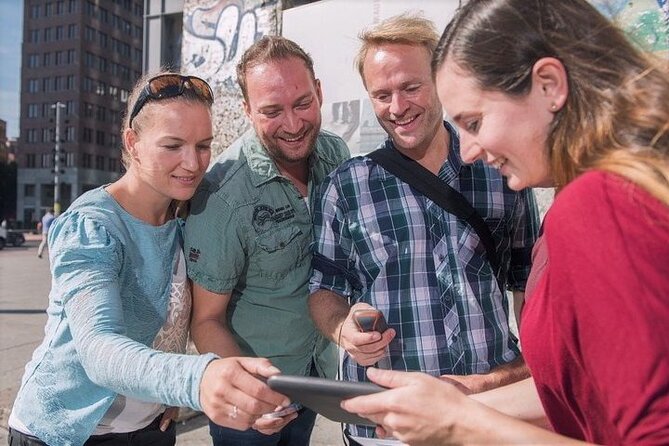
This is not a classic guided walk with a person talking the whole time. It is an interactive e-Scavenger hunt Milan experience, built around a smartphone app that gives you the next waypoint, then nudges you to answer questions and complete mini assignments as you go.
That design matters. When you explore Milan under your own rules, you can pause for a photo, step into a café line, or slow down when a façade grabs you. In a city where the “must sees” can stack up fast, this kind of structure helps you get your bearings without feeling rushed by a schedule.
The other win is how it encourages observation. The landmarks are familiar names, but the app turns them into prompts. You are not just walking past big stone. You are looking for details the game asks about, which is exactly how you start to learn a city instead of just checking boxes.
You can also read our reviews of more city tours in Milan



Price and value: $36.07 per group can be a bargain

The price is $36.07 per group, and the group size is up to 6. That pricing is important because it changes the math. If you are traveling solo, it is still a reasonable use of time. If you are going with family or friends, the per-person cost drops quickly, and you can treat the walk like an inexpensive, self-led “day activity” that keeps everyone engaged.
You should also think about what is included versus not included. The hunt includes the online app and the game itself. What’s not included is the use of your smartphone and data, which means your total cost depends on your own phone plan or willingness to use data. If you have no data and no offline option, you might be stuck.
Finally, one short reality check from a low review: the experience depends on the app working smoothly, and the instructions quality can make or break your mood. If you prefer a traditional printed guide or a live guide, you might find the app style less satisfying.
From Piazza Fontana to Galleria Vittorio Emanuele II: a Milan warm-up
Your start point is Piazza Fontana (20122 Milano), and the activity ends back at the same meeting point. From there, your route quickly steers you toward one of the most cinematic parts of Milan, Galleria Vittorio Emanuele II.
This shopping arcade is Italy’s oldest active shopping gallery and a major landmark. In practice, it is a great first move because it gives you an enclosed, easy-to-navigate environment where you can get the app flowing, settle into the rhythm of the game, and build momentum before the bigger open-air landmarks.
What I like about beginning here is that it sets expectations. Milan’s famous sights are not just monuments. They are also places where everyday life happens, and the Galleria is a perfect example. As you play, you will be encouraged to notice details that might otherwise blur together in a city full of stone and scaffolding.
The Duomo and Duomo Square: learn the icon, not just the postcard
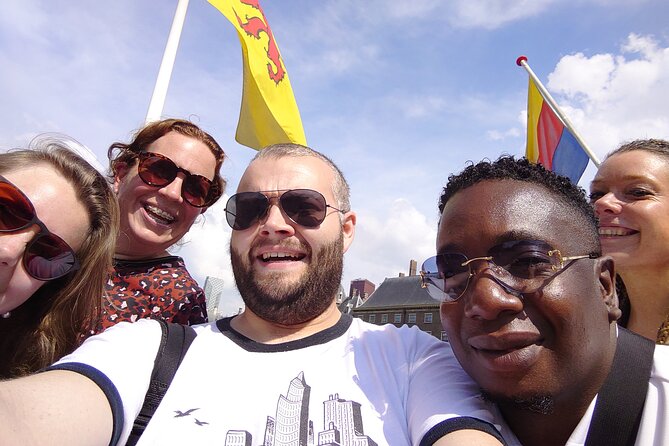
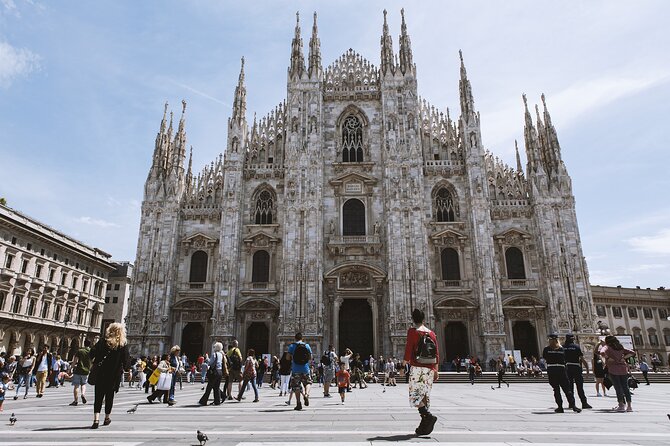
Next up is Milan Cathedral, officially described as the Metropolitan Cathedral-Basilica of the Nativity of Saint Mary. The game also keeps you tied to the Duomo Square area, which is enclosed by the cathedral. Shopping draws many crowds here, so expect people around the edges.
The cathedral is one of those sights where your first reaction might be, wow, scale. The hunt approach is better because it pushes you toward specifics. You get prompted to look for features described as you go, including the idea that there are more than just gargoyles up on the cathedral, and that the roof is famed for statues.
That matters for how you experience the Duomo. If you show up only expecting a wide view, you might miss what makes the façade so compelling up close. If the app is working well for you, it can help you slow down and focus your attention.
Practical tip: plan a little patience. The Duomo zone is popular. Even with a self-paced hunt, you might need a few minutes to move through dense foot traffic to keep the game moving.
Castello Sforzesco and Porta Sempione: big landmarks, strong geometry

From the cathedral area, the route moves toward Castello Sforzesco, a medieval fortification built in the 15th century. Castello Sforzesco is the kind of stop that makes you recalibrate. You go from intricate Gothic stone to a fortress-shaped statement in the skyline, and that contrast helps your brain lock in Milan’s different eras.
Then you come to Porta Sempione, a city gate and also a name used for the surrounding district. A gate is a useful anchor point on a self-led route because it helps you understand how neighborhoods and movement connect. It is not just a photo spot. It is also a geographic clue.
What to do here, while you are playing: treat the geometry as your guide. Aim to match what the app asks about with what you see around you. Even when you think you already know the landmark from photos, these stops can teach you how Milan places major structures along corridors and sightlines.



San Fedele, Casa Panigarola, and San Lorenzo: history in the quieter lanes

The hunt also includes several churches and historic sites that feel less like the headline and more like Milan’s supporting cast.
- San Fedele is a Jesuit church dedicated to St. Fidelis of Como.
- Casa Panigarola, also known as Palazzo dei Notai, is a historic building in Piazza Mercanti, described as a former city center in the Middle Ages.
- Basilica of San Lorenzo Maggiore is a church located within the city’s ring of canals, and it was originally built in Roman times.
These are the stops where a self-paced format really shines. If you were doing a traditional tour, these might become quick photo moments. In a game-led hunt, you are more likely to slow down enough to actually read what you are looking at and connect it to the prompts.
If you enjoy architecture and religious art but do not want to spend your whole day in museums, this part of the route can be a sweet spot. It gives you variety without requiring a ticketed indoor stop to enjoy the experience.
Santa Maria delle Grazie and the Last Supper: what you learn from the prompt
The route includes Santa Maria delle Grazie, described as a church and Dominican convent in Milan and a UNESCO World Heritage Site. Also on the way is The Last Supper, a late 15th-century mural painting by Leonardo da Vinci housed in the refectory of the convent.
Even if you do not plan to enter every place the way you might on a museum day, having The Last Supper and its setting included in your hunt is valuable. Leonardo is one of those names that can feel abstract until you stand near the actual location context. The app format helps by tying the landmark to short questions and learning moments.
One caution for your planning: the famous mural is controlled for viewing in many cities, and rules can change. The hunt will point you toward the site, but it does not tell you in your provided info that you automatically get timed entry. If seeing the mural up close inside is your goal, I’d treat this as a “go by the area” highlight and verify entry requirements before you go.
Brera and Pinacoteca di Brera: art meets a walkable neighborhood
Next, the hunt heads toward Brera, part of the Centro Storico district. Brera is described as elegant, home to Pinacoteca di Brera, and known for fresco-filled spaces.
The Pinacoteca di Brera is also called Milan’s main public gallery for paintings and it contains one of the foremost collections of Italian paintings.
Here’s how to use this portion for value: treat it as a choose-your-moment stop. The hunt structure gives you a reason to come to Brera, but you can decide how much time you want to spend with art once you arrive. If you are curious and energized, you can build on what the app leads you to. If you are tired, you can still enjoy Brera’s atmosphere and move on without feeling like you missed the entire point.
One more practical note: Brera can involve more indoor pacing than the outdoor landmarks. Keep some flexibility in your timing, because a game you can do at your own pace should not become a sprint.
Basilica di Santa Tecla and the statues and trompe-l’oeil detail
Another standout name on the route is Basilica di Santa Tecla, described as a former paleo-Christian basilica church in Milan. The provided details also highlight specific features that you might want to hunt for while you are nearby, like the fact that the roof is famed for statues, plus a “false apse” described as an early example of trompe-l’oeil, attributed to Donato Bramante.
This is the kind of stop that can quietly become one of your favorites. Milan’s biggest monuments can swallow your attention. But if the app pushes you to notice the trompe-l’oeil concept, you start seeing the city as a set of visual tricks and craft choices, not only as famous building silhouettes.
The Giuseppe Bovara fountain and the human scale between stops
Your route also references a rectangular fountain designed by Giuseppe Bovara, with water gushing out through three mouths, two lateral and one front.
A fountain might not sound like a top-tier destination compared with a cathedral or Leonardo. That is exactly why it works in a scavenger hunt. Between heavy hitters, a small landmark gives your feet a reset and your eyes a new angle. It also helps you keep the game from turning into nonstop “look at this, look at that.”
If you want to get more out of the hunt, treat these smaller waypoints as deliberate breaks. Take 30 seconds to stop, read what you can, and then continue.
Palazzo Litta and the end back at Piazza Fontana
The route also includes Palazzo Litta, also known as Palazzo Arese-Litta, described as a Baroque structure in Milan.
Then you return to your starting point at Piazza Fontana. That loop is practical because you do not have to figure out where to meet for pickup or how to get back to a planned endpoint. When your day includes several iconic stops, being able to start and end in the same place makes the whole experience feel more manageable.
Tips to make the app work for you
This experience is simple in theory, but it relies on your phone functioning well. Here’s how to get the best shot at a smooth, satisfying hunt.
- Bring a phone charger or at least be mindful of battery. If you are playing across multiple stops, screen time adds up.
- Check your data plan before you start. The app is included, but data is not.
- Do not overpack your day. A 2 to 4 hour window is a wide range because you control pace. Build breathing room so you do not feel pressured.
- Expect crowds near Duomo. Even if you follow the prompts perfectly, moving through the area can slow you down.
And one more practical note after reading the lower-rated feedback: if you prefer extremely clear step-by-step instructions, do a quick test of the app right after you begin. If anything feels confusing, it is better to troubleshoot early than later.
Who this is best for (and who should skip it)
You will likely enjoy this hunt if you want a self-paced city walk that mixes iconic Milan with smaller details. It’s also a good match for families and mixed groups, since the tone is described as family-friendly and it works for different ages.
It can be a smart choice for people who do not love following a guide, or who want to spend more time lingering at a place that catches their eye. The format is also good value if you have a small group of up to 6 and can split the group price.
I’d be cautious if you specifically want a full narrative from a human guide. One review example flagged that the experience felt more like the game than a true guide, and that the explanation was poor for them. If you know you need lots of clear interpretation to enjoy a landmark day, you might find a traditional guided tour a better fit.
Should you book the e-Scavenger hunt Milan?
Book it if you like interactive challenges, want to see Milan’s main highlights without a strict itinerary, and you have a workable plan for using your phone and data. The start at Piazza Fontana, the loop through the Duomo zone, and the inclusion of major names like Castello Sforzesco and the Last Supper area make it an efficient way to cover a lot of ground in 2 to 4 hours.
Skip it if you want a traditional guided explanation, or if you know your phone data access is unreliable. If that sounds like you, look for an option that does not depend on app connectivity, or plan to use offline navigation alongside the hunt.
FAQ
How long does the e-Scavenger hunt take?
The experience is listed as about 2 to 4 hours.
Where does the hunt start and end?
It starts at Piazza Fontana, 20122 Milano MI, Italy and ends back at the same meeting point.
How much does it cost?
It’s $36.07 per group, up to 6 people.
What do you actually receive for the tour?
You get an online app to play the game on your phone, plus the city walk experience led by the app.
Is a smartphone required?
Yes, the app requires use of your smartphone, but smartphone use and data are not included.
Is this a private activity?
Yes. It is private, and only your group participates.
When can you do it?
It’s available every day, 12:00 AM to 11:59 PM within the listed operating dates. Confirmation is received at the time of booking.
More City Tours in Milan


More Tour Reviews in Milan
Not for you? Here's more nearby things to do in Milan we have reviewed











City Tours, compared.
 ★ 4.0City Sightseeing Hop-On Hop-Off Bus with Audio GuideFrom $266,256 reviews
 ★ 4.5Transfer Milan City Centre – Bergamo AirportFrom $13975 reviews
 ★ 4.0The Milan Pass City CardFrom $105655 reviews
 ★ 4.4From Milan: Day Trip to Venice with Guided City TourFrom $146614 reviews
 ★ 4.5Guided Duomo, Last Supper and City Centre TourFrom $105452 reviews
 ★ 4.0Venice Day Trip from Milan with Guided City TourFrom $157383 reviews
 ★ 4.7Best of City Walking Tour with Last Supper TicketsFrom $112359 reviews
 ★ 5.0Lake Como: eBike City Tour Guided by an iPad and a Tour LeaderFrom $96253 reviews
Browse the lists this tour appears in