
Review · GUIDED
Milan Skyscrapers Guided Tour: Porta Nuova, Unicredit tower & Vertical Forest
Milan’s newest skyline has a story. On this 3-hour architecture walk, you trace the Expo 2015 renewal through Porta Nuova’s modern terraces and the Vertical Forest experiment in Isola. I like the clear, design-focused explanations, and I like that you move through real streets, not just viewpoints.
One small thing to consider: this is mostly outdoors walking, and the route can feel long in heat. If you pick a summer afternoon, plan for sun and water, because there are plenty of exterior stops.
You’ll start at Eataly Milano Smeraldo and end back at the same place, with time to sample regional bites once the sightseeing is done. The tour is private, and you’ll have a professional art historian guide leading the way.
Key things to know before you go
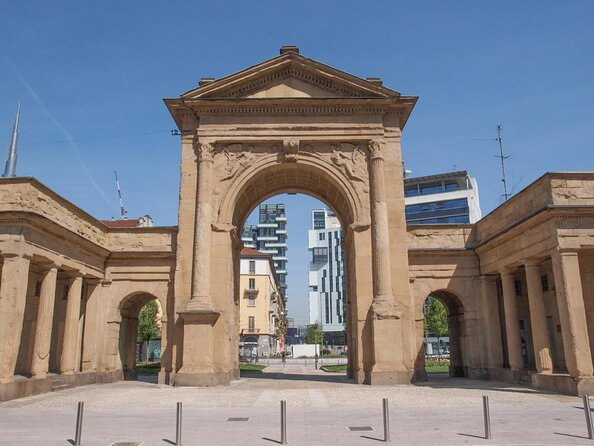
- Expo 2015 meets eco-design: You connect the renewal project to today’s greener ambition, not just the shiny skyline.
- Porta Nuova includes terrace time: The route mentions climbing up to one of the district’s scenic terraces for bigger city views.
- Corso Como and Gae Aulenti Square: You walk through two of the area’s best-known public spaces before landing at the Unicredit Tower.
- Vertical Forest facts you can repeat: Expect numbers like about 900 trees and over 20,000 plants, plus an explanation of biodiversity goals.
- Isola’s older blocks sit beside the new: The tour pairs modern towers with historical apartment forms and commons-style galleries and courtyards.
Porta Nuova and the Expo 2015 renewal story
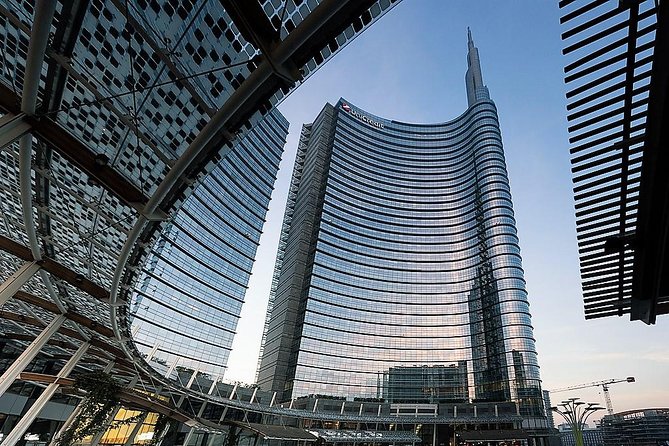
Porta Nuova is where Milan decided to redraw its own skyline. The core idea you’ll hear is tied to the Expo 2015 hosting, which triggered a big renewal project aimed at sustainability and long-term city improvements.
What I like about this section is how the tour treats the district like a living plan, not a set of isolated buildings. You get to see how the area was rebuilt and how the design language changed, especially in public space, movement, and tall-structure density.
The walk also includes an elevated moment. You can climb up to the top of one of the district’s scenic terraces, which helps you understand what the architects were trying to achieve, from street level up to the city rhythm. Terrace time matters because Milan can look different depending on the angle, and that vertical perspective makes the story click faster.
Practical note: terraces and open-air viewpoints mean more sun exposure than you might expect. If you’re going in warmer months, I’d bring water and a hat, and wear shoes you can trust for steady walking.
You can also read our reviews of more guided tours in Milan

Corso Como, Gae Aulenti Square, and Unicredit Tower
After Porta Nuova, the route shifts into a more urban, street-level Milan. You’ll stroll along Corso Como, described as a landmark of Milan by night, which tells you the area is meant to feel lively even when the focus is architecture and design.
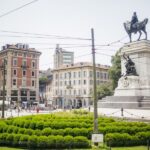
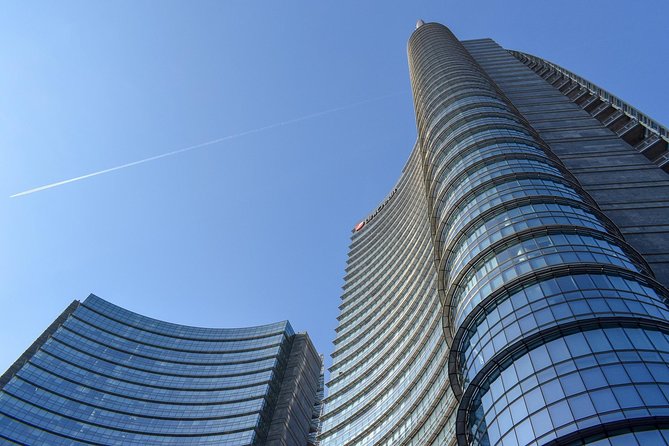
Then you’ll reach Gae Aulenti Square, a key meeting point because it frames what comes next. The square is where the tour’s focus tightens around the Unicredit Tower, identified in the itinerary as one of Europe’s highest skyscrapers and the tallest in Europe.
What’s useful here is that the explanation is not only about height. The idea is to show how a single building fits into a larger urban overhaul. When you stand in a designed public space and look up at a major tower, you start to see how wind flow, pedestrian circulation, and surrounding blocks influence what feels comfortable at ground level.
Also, tower-view logistics can be a little confusing in many cities. Here, the payoff is that you’re walked to the right orientation points while your guide talks through the design context. It’s the difference between taking a random photo and actually understanding what you’re looking at.
Unicredit Tower: what to look for besides the height
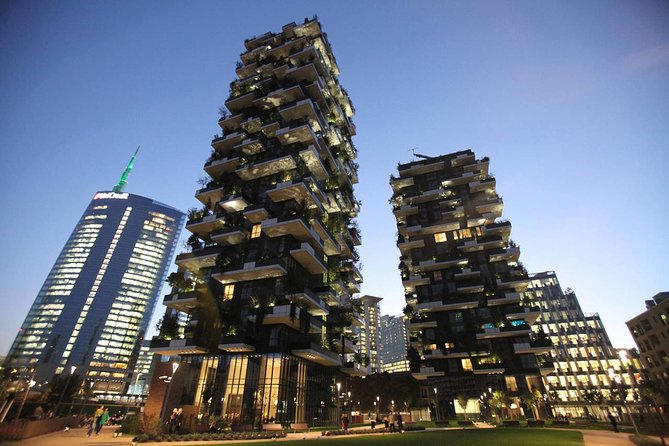
Seeing the Unicredit Tower is the headline, but you’ll get more value if you treat it like a “read the building” moment. As you’re in Piazza Gae Aulenti, pay attention to how the plaza space is shaped for people, then look up and notice how that contrasts with the tower’s vertical emphasis.
This is a good time to slow down mentally. Even if you mostly care about architecture, a quick guide can still help you notice details you would otherwise skip, like how the tower’s presence changes the feel of the street edges around it.
You’ll also want to keep your expectations realistic. A 3-hour walking tour is not designed for long indoor detours or extended museum time, so the tower stop works best as a focus point, with your guide giving you the bigger picture while you’re there.
If you’re someone who loves skyline photos, this is your moment. If you’re more interested in how cities get rebuilt, the tour’s structure helps you connect this tower to the wider Porta Nuova transformation instead of treating it as a one-off sight.
Isola’s railing houses and the Vertical Forest idea
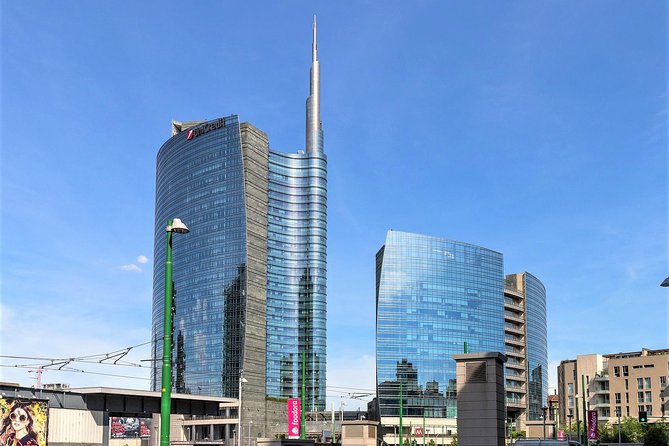
Next comes Isola, a district with older texture in the mix. The tour connects Isola to its distinctive apartment style, including the so-called “railing houses” that share commons galleries and courtyard spaces. That detail matters because it shows another side of city design, one built around community-friendly layouts rather than landmark architecture.
From there, you shift to the star project: the Vertical Forest towers. The itinerary calls them the Vertical Forest, and notes they received an award in 2016 as the most beautiful urban project of the World. Even if you don’t remember the award name later, the concept is easy to carry forward.
The guide’s explanation centers on the towers as a model for urban reforestation and biodiversity. In plain terms, the goal is to regenerate the environment without expanding the city footprint. The tour also provides a key scale point: roughly about 900 trees and more than 20,000 plants used on the towers, which gives you a sense of what “vertical” really means here.
What I like about this stop is the way it blends the visual and the practical. You’re not just looking at a tower that has plants on it. You’re learning why that planting concept was important enough to become part of the architecture itself.
A possible drawback: the Vertical Forest is visual from multiple angles, and if the day is windy or very hot, it can be harder to linger. Still, your guide’s walking route helps you hit a few good sightlines without turning the experience into a marathon.
Eataly finish: turning design fatigue into Italian flavors
The tour ends back at Eataly Milano Smeraldo, which is smart planning. After a few hours of walking, you need somewhere that feels central and easy to re-enter, and Eataly does that.
This isn’t presented as a sit-down restaurant event. Instead, you’re directed to a food hub where you can sample regional typical foods from across Italy, from Valle d’Aosta down to Sicily. That range is part of the fun because it turns your last stop into a small Italy tour in miniature.
I also like the psychological payoff. Architecture tours can be heavy on facts and shapes. A food finish helps you reset while you still get to share the day with your group.
One practical tip: Eataly is popular, so if you’re sensitive to crowds, give yourself a few minutes to settle in before you start tasting. Also, if you want to keep your spending under control, decide what you actually want to try before you get pulled into the full range of options.
Price, time, and value of a private architecture guide
At $265.09 per person for an experience lasting about 3 hours, you’re paying for more than walking and photos. The included items list a professional art historian guide and a private tour, which changes the value equation in your favor if you like getting answers and tailoring your pace.
Private tours can feel pricey at first glance, but they’re often best value when you travel with a small group. Even if it’s priced per person, your group gets more direct attention than you would on a standard group bus tour.
There are also group discounts mentioned, so if you’re traveling with others, it’s worth checking how the total changes with your party size. And since the tour uses a mobile ticket, it can be simpler to manage day-of plans.
Timing matters too. This is listed as something booked on average 45 days in advance, so it’s not usually a late-decision activity. If you want a specific day or a comfortable start time, plan ahead.
One more value point: this itinerary is structured around transitions. You’re not just bouncing between random landmarks. You get a sequence that moves from Porta Nuova renewal, to street life around Corso Como, to major skyline recognition at Unicredit and Gae Aulenti, and then to Isola’s older urban fabric plus the Vertical Forest.
That flow is what makes the 3 hours feel worth it. You leave with a mental map of why Milan looks the way it does right now, not just what it looks like.
What this tour is best for (and who should skip it)
This tour fits best if you like architecture with an explanation. You’re dealing with modern planning, eco-design messaging, and district-level transformation, which your guide can tie together in a way that’s hard to do on your own from a guidebook.
It also works well if you want a balanced day that includes food. The route ends at Eataly, so it’s not all concrete and glass with no reward.
If you don’t like walking much, or you prefer indoor stops and long sitting time, this may feel a bit too exterior-focused. The tour calls for moderate physical fitness, so expect steady time on your feet.
It’s also a good choice if you like the idea of getting orientation quickly. New Milan areas can be confusing because streets and districts have a lot of modern geometry. A guide helps you avoid spending your energy figuring out where to stand.
Finally, if you’re visiting in summer, treat this like a daytime walking plan with heat in mind. Bring water and plan for shorter photo stops if the sun is intense.
Should you book the Porta Nuova and Vertical Forest tour?
I think this is worth booking if you want a guided walk that actually explains why Milan’s modern skyline exists, and how it connects to Expo 2015 renewal plus greener urban design. The route gives you the skyline highlights, but it also pairs them with Isola’s older building style, which adds context.
Book it sooner rather than later since it’s commonly reserved about 45 days in advance. And if you’re traveling as a small group, the private guide format usually makes the cost feel more fair.
If you hate outdoor walking, want only one or two stops, or you’re not interested in design context, you might prefer a shorter self-guided option. But if you want a clean, structured 3-hour story through Porta Nuova, Corso Como, Unicredit, and the Vertical Forest, this one is a strong match.
FAQ
How long is the Milan Skyscrapers guided tour?
The tour lasts about 3 hours.
How much does the tour cost?
The price is $265.09 per person.
What is the meeting point for the tour?
You meet at Eataly Milano Smeraldo, P.za XXV Aprile, 10, 20121 Milano MI, Italy.
Where does the tour end?
The tour ends back at the meeting point.
Is this tour private?
Yes, it is a private tour/activity, and only your group participates.
What is included in the tour price?
A professional art historian guide and the private tour are included.
Is hotel pickup or drop-off included?
No, hotel pickup and drop-off are not included.
What sights will I see during the tour?
You’ll see Porta Nuova, Corso Como, Gae Aulenti Square and the Unicredit Tower, and the Isola district including the Vertical Forest towers. The tour also takes you to Eataly.
Do I need to have a certain fitness level?
You should have a moderate physical fitness level.
Do I get a mobile ticket, and can I cancel for a full refund?
You receive a mobile ticket. You can cancel for a full refund up to 24 hours in advance of the experience start time.
More Guided Tours in Milan

More Tours in Milan



More Tour Reviews in Milan
Not for you? Here's more nearby things to do in Milan we have reviewed



Guided, compared.
 ★ 4.7Da Vinci’s Last Supper Guided TourFrom $7510,143 reviews
 ★ 4.0City Sightseeing Hop-On Hop-Off Bus with Audio GuideFrom $266,256 reviews
 ★ 4.7Guided Walking Tour & Last Supper Visit with TicketFrom $1015,409 reviews
 ★ 4.7Fast-Track Milan Cathedral and Terraces Guided TourFrom $465,240 reviews
 ★ 4.4Official San Siro Stadium and Museum Guided TourFrom $403,573 reviews
 ★ 4.1La Scala Theater & Museum Guided ExperienceFrom $342,931 reviews
 ★ 4.7Last Supper Guided VisitFrom $752,854 reviews
 ★ 4.8Duomo Rooftop and Cathedral Guided Tour with TicketsFrom $572,678 reviews