Review · MILAN
Milano: Degustazione caffè di qualità dalla moka al filtro
Coffee can taste like a new world. In Milan, Il Cafetero takes you from single origins to three classic brews, Moka, V60, and Chemex. You learn how extraction changes flavor, not just how to drink coffee.
I love how this experience nudges you to taste coffee as coffee, not as milk-first drinks. I also love the small group setup, with facilitators such as Ivone and Federico keeping the mood friendly and the explanations clear.
One possible drawback: if you want a quick caffeine stop only, the full tasting and method comparisons take time. Two hours of comparing flavors and technique might feel like structured learning, not a casual hang.
Key highlights worth your attention
- Three single origins, chosen by season and availability, from Africa, South America, and Asia
- Three brew methods in one session, so you can hear the differences out loud and taste them too
- Lots of water between tastings, which matters more than most people think
- Moka, V60, and Chemex are taught as tools you can reproduce at home
- Dessert included, with a vegan option, plus sweets or biscuits (vegan or gluten free)
- Special discount on coffee beans, so the lesson has a follow-up
What Il Cafetero teaches you about coffee, beyond the cup
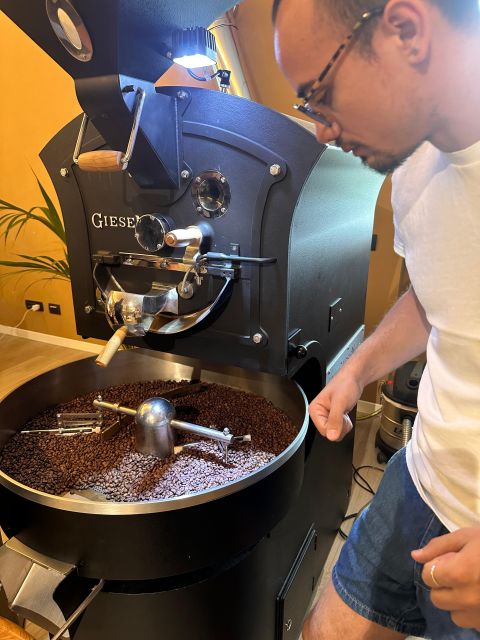
This class is built around a simple idea: coffee has a real taste story, and you can learn to read it. Il Cafetero frames the experience as a journey from origin to cup, so you understand what you are drinking, not just whether it feels strong or smooth.
The lineup starts with three single origin coffees. That means each coffee traces to single plantations or single producers, and the exact selections depend on what is available during your dates. Expect variety from across Africa, South America, and Asia. That matters, because it gives you something concrete to compare, instead of tasting mystery blends that all blur together.
You also get a strong emphasis on extraction. This is where coffee classes often go vague. Here, you actually compare the same style of coffee through different methods, so you can feel how flavor changes when water meets grounds in different ways. That hands-on comparison is the heart of the value.
Finally, the pace is designed to be pleasant. The session includes plenty of water between cups so your palate resets. Add in dessert and biscuits, and the whole thing feels like guided tasting with a real social side, not a lecture where you sip politely and hope you remember anything.
You can also read our reviews of more tours and experiences in Milan.



Your 2-hour tasting flow: single origins, reset water, and method swaps
Plan for a tightly run 2 hours. In that time, you taste three single origins, then you experience them through three different extraction methods: Moka, V60, and Chemex. You are not just collecting three random coffees, you are learning a system of cause and effect.
Here is why the structure helps you:
- You taste in steps, not all at once, which keeps your brain from turning everything into one big flavor smear.
- You get water between tastings, which helps you clear out lingering tastes, especially after stronger or more aromatic cups.
- You learn the preparation techniques as part of tasting, so you leave with something usable, not only memories of what was served.
The group stays small, with a limit of 6 participants. That’s not just a comfort perk. In small groups, questions actually get answered, and explanations can land in the same way for everyone at the table.
Language support is also practical. The instructor can work in English, Italian, and Spanish, so you do not have to guess your way through tasting notes.
Moka pot: Italian tradition, then the practical tuning for better cups
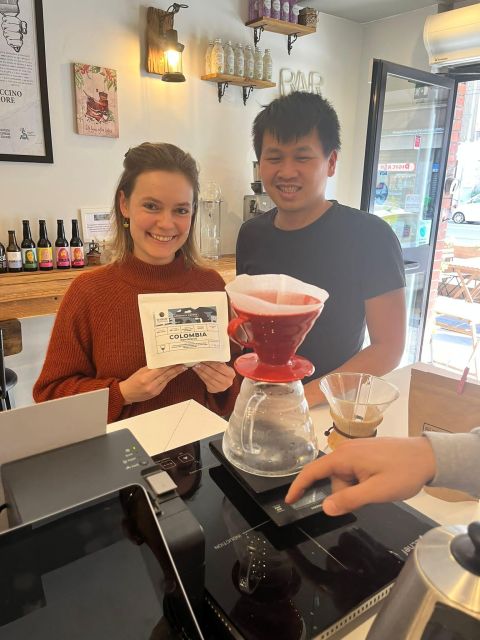
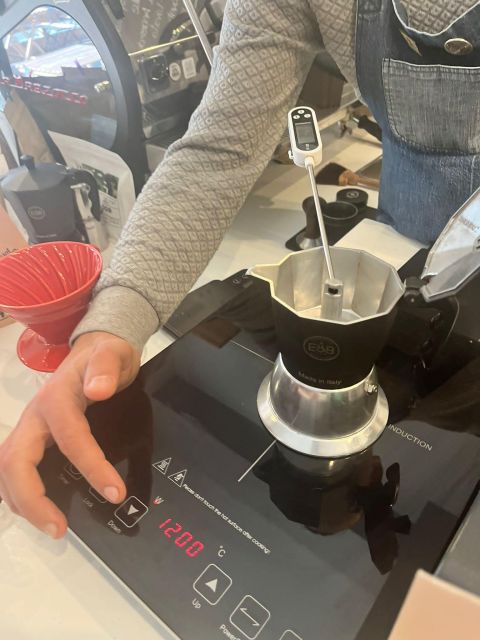
Moka is a classic for a reason. It is a symbol of traditional Italian coffee culture, and in this session you learn how the method has shifted over time and how to use it to bring out the coffee’s natural aromatics.
What makes Moka interesting in a tasting class is that it is familiar enough to feel approachable, but different enough that technique still matters. When you taste under Moka-style brewing, you start noticing what changes when heat, grind, and timing line up well versus poorly. The point is not to chase a perfect number. It is to understand how the method can highlight certain aromatic qualities while also influencing the coffee’s intensity.
The home takeaway here is mindset. You will learn the best techniques for preparing an excellent coffee also at home, and you can connect those tips directly to what you taste in the cup. If you usually drink espresso-based drinks with milk, this is often where the surprise begins. You start to notice that good coffee does not only taste like caffeine or sweetness. It can feel textured and aromatic, even before any dessert or sugar enters the story.
One consideration: if you already know every Moka trick and you want only super niche theory, you might feel like you already grasp the basics. Still, the strength of this experience is that you are not learning Moka in isolation. You are learning it in comparison with V60 and Chemex, which makes it easier to remember what changes and why.
V60 pour-over: understand filter coffee vs American-style and taste the difference
Then you shift to V60, one of the best known methods for baristas. It is widely loved abroad, and you may have noticed it arriving in some Italian coffee shops too.
This is the part where the class helps you cleanly separate two things that often get mixed up. You learn the difference between American coffee and filter coffee, then you taste what that difference feels like in practice.
Why this matters for you: the terms can sound similar on a menu, but the brewing approach changes what ends up in the cup. With a pour-over style method like V60, the process highlights clarity and brings out distinct notes that can feel more separated than what you get from traditional methods.
In the tasting, you can expect the instructor to connect the method to preparation technique and to explain what to adjust at home. That typically includes thinking about how the brew is carried out and how you manage consistency from cup to cup. You are not just learning to pour. You are learning to reproduce a result.
A helpful side effect: V60 is a great gateway for people who do not want to jump straight into espresso machine territory. If you enjoy experimenting, this method gives you a practical platform at home with a learning curve that is manageable.
Chemex: the signature look, and why it can taste very aromatic
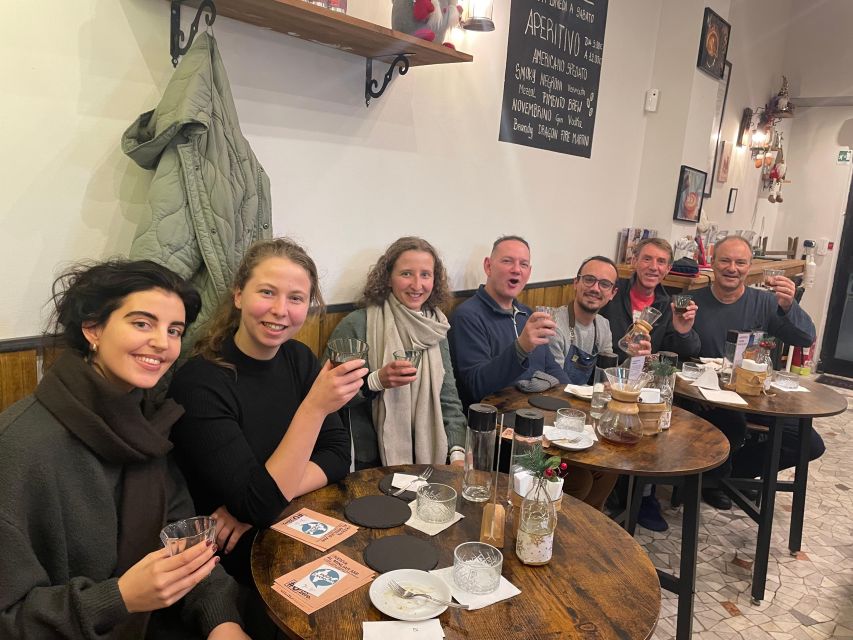
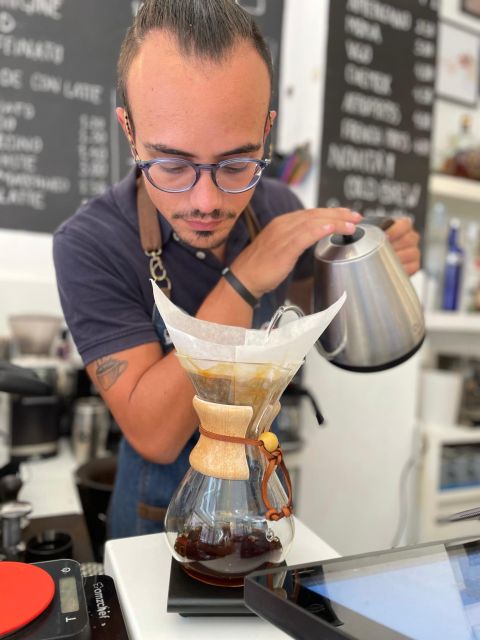
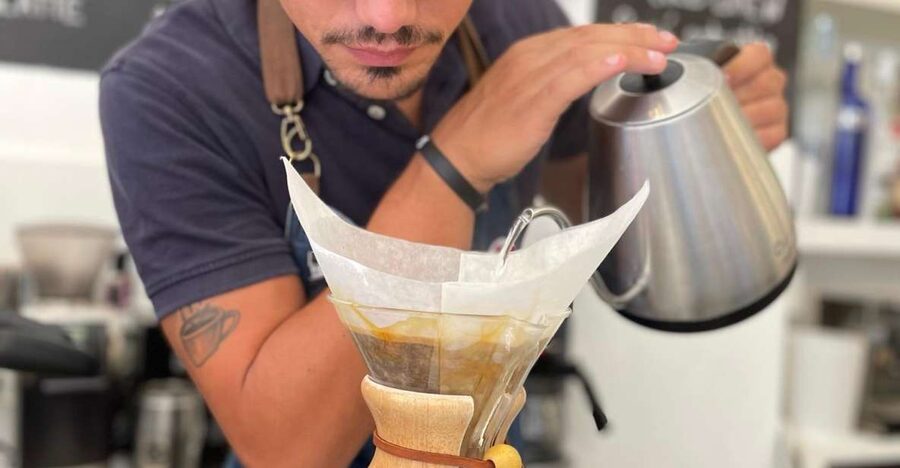
Finally, you move to Chemex, recognizable by its design. In the session, Chemex is positioned as the last method in the tasting lineup, and it is used to help you taste coffee in a way that often emphasizes aroma.
The aromatic experience is not random. Different filters and extraction styles can change how flavors show up first and how they linger. Chemex tends to feel more structured to many coffee drinkers, and this class uses it to help you pinpoint what extraction changes are responsible for that impression.
What I like about finishing with Chemex is that it gives you closure. After tasting Moka and V60, you have a reference point. When you reach Chemex, you can compare rather than guess. That makes your notes easier to keep, even if you are not the type to write tasting cards.
At home, the lesson becomes about technique and attention. You will get tips for implementing what you learned, so you can aim for the aromatic profile you experienced, not just replicate the equipment.


Dessert, vegan options, and why the breaks actually make you a better taster
Coffee tastings can be overwhelming if they all blend together. This one works because it builds in breaks and food.
You get sweets or biscuits between or alongside tastings, including options that are vegan or gluten free. And you also get dessert of your choice, including a vegan option. This means you can treat the experience like a small meal moment, not just a sequence of sips.
The water part is especially important. You are offered a lot of water between one coffee and another. In plain terms, that reduces the chance you will mistake one strong flavor for the next coffee’s true profile. It is a small detail that makes a big difference in how accurately you can taste and compare.
My practical advice: when dessert arrives, pick something that does not completely dominate. You want a pairing that adds comfort without smothering the coffee memory you are trying to learn from. If you love sweets, you will still enjoy it, but try to keep your first bites small so you can taste the coffee response too.
Price and value at $35: why this feels fair for what you get
At $35 per person, this class sits in a midrange price spot for Milan activities. The key question is what you get for that price, and here the ingredients are strong.
You get:
- Three different single origin coffees to taste
- Three extraction methods taught through real tasting comparisons (Moka, V60, Chemex)
- Lots of water between coffees for palate reset
- Sweets or biscuits, including vegan or gluten free options
- Dessert with a vegan option
- A special discount on coffee beans, so you can extend the experience at home
What makes it feel like good value is the combination of tasting and instruction. Many coffee experiences hand you a cup and call it done. This one builds the lesson around differences in extraction and gives you enough guidance to practice at home.
The small group size also adds value. With a limit of 6 participants, you are less likely to feel like you are watching from the back row. You get a more personal teaching vibe, and the session can move at a human pace.
If you love coffee but mostly drink milk-based drinks, this is also a good deal for one simple reason. It helps you taste coffee on its own, so you might stop wasting money on drinks that cover up what you actually want to learn. That shift can save you time and cash later.
Who this Milan coffee class is best for
This experience is a great match if you fall into any of these buckets:
Coffee curious beginners
If you normally drink cappuccino or latte and want to understand what is hiding underneath, the method comparisons are built for you. You get a guided path from traditional to modern brewing styles.
Home brewers who want a map
You are not just buying gear. You learn techniques tied to the outcome you taste in the room.
People who like structured, friendly learning
The session runs like a guided tasting with time for explanation, not like a rigid class.
People who appreciate dietary care
Vegan options are included, with vegan dessert and vegan or gluten free sweets and biscuits.
If you are a coffee super-nerd who wants advanced chemistry and lab-style tasting calibration, you might find the content more practical than academic. Still, the hands-on method contrast is useful even when you already know some basics.
Should you book Il Cafetero’s coffee degustazione in Milan?
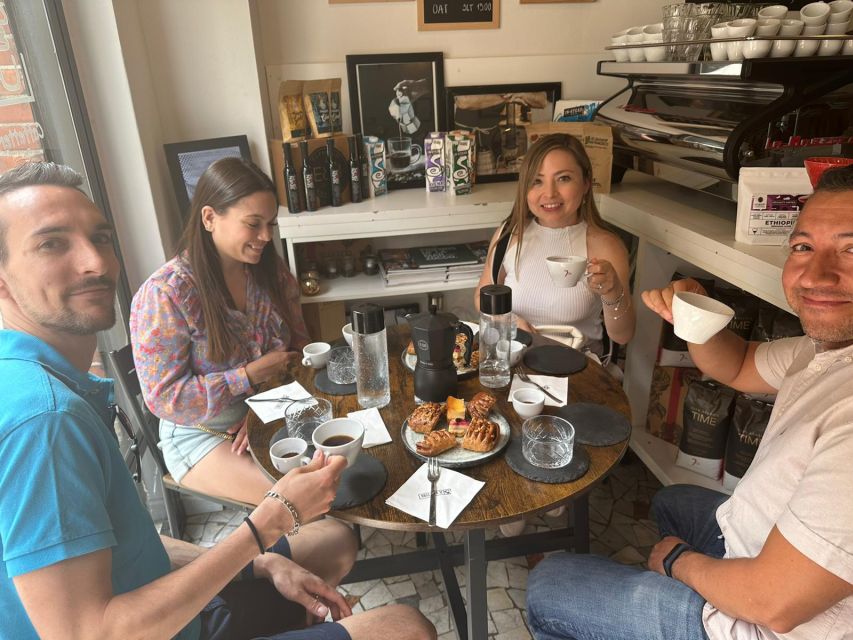
I think you should book this if you want a coffee experience that is both fun and actionable. The strongest reason is the structure: three single origins paired with three brew methods, plus palate resets and dessert. You leave understanding why the same coffee can taste different, and you get tips you can use at home.
Book it sooner if you want an experience that feels small-group and not overwhelming. A limit of 6 participants helps the session stay personable, and the instructor can work in English, Italian, and Spanish, so you should be comfortable wherever you start.
If you are unsure, here is the tiebreaker: do you want to taste and learn coffee as a standalone drink? If yes, this is the right kind of Milan activity. If you only want a quick coffee and a walk, skip it and do a simple café stop instead.
One more practical note: there is free cancellation up to 24 hours in advance for a full refund, and reserve now, pay later is available. That makes it easier to plan your week without stress.
FAQ
How long is the coffee tasting experience?
It lasts 2 hours.
How many people are in the group?
It is a small group limited to 6 participants.
What coffee will I taste?
You will taste 3 types of single origin coffee, chosen based on seasonality and availability from producers or plantations in Africa, South America, and Asia.
Which brewing methods are included?
You will taste using three extraction methods: Moka, V60, and Chemex.
Is dessert included, and is there a vegan option?
Yes. Dessert is included and you can choose among options, with a vegan option available. Sweets or biscuits are also included, with vegan or gluten free options.
What languages does the instructor speak?
The instructor can guide the session in English, Italian, and Spanish.