
Review · MILAN DUOMO & CATHEDRAL TOURS
Milano City Escape: “The tenant of the Duomo”
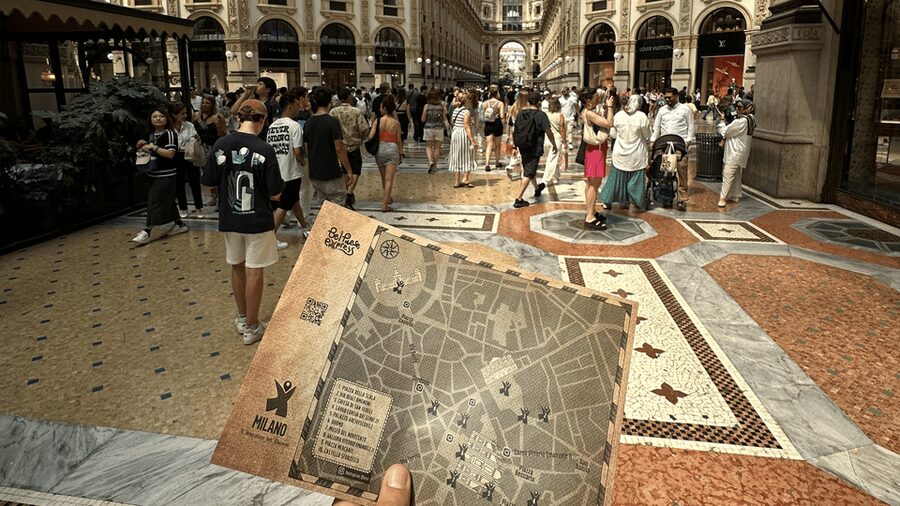
A treasure hunt next to the Duomo. Milano City Escape turns the center of Milan into a self-guided mystery walk you run on your smartphone, with riddles that guide your steps instead of a traditional tour script.
I especially like the concept of a story anchored to the Duomo area, including the odd detail of an hermit who built a humble shack from cathedral construction scraps, then disappeared after it was destroyed. I also like that the format is playful and social, so it works well as a shared challenge with your partner, family, or friends, not just a solo activity.
One drawback to consider is that puzzle quality can vary, and some clues may feel more like navigation than true brainteasers, which can make the walk feel a bit more “hurry up and move” than relaxed sightseeing.
Key things I think are worth knowing
- Duomo-area storyline: The mystery connects to a very specific legend near Milan Cathedral.
- Treasure hunt 2.0 format: Riddles, map guidance, and a final prize replace typical museum-style stops.
- Self-guided by design: No live guide, so your phone and attention to clues matter.
- Flexible pacing within a 3-hour run: Start when you want, then work through checkpoints until the mission ends.
- Good fit for groups of up to four: The price is per group, which can make it a strong value for friends or family.
Milano City Escape: The Duomo mystery game in plain terms
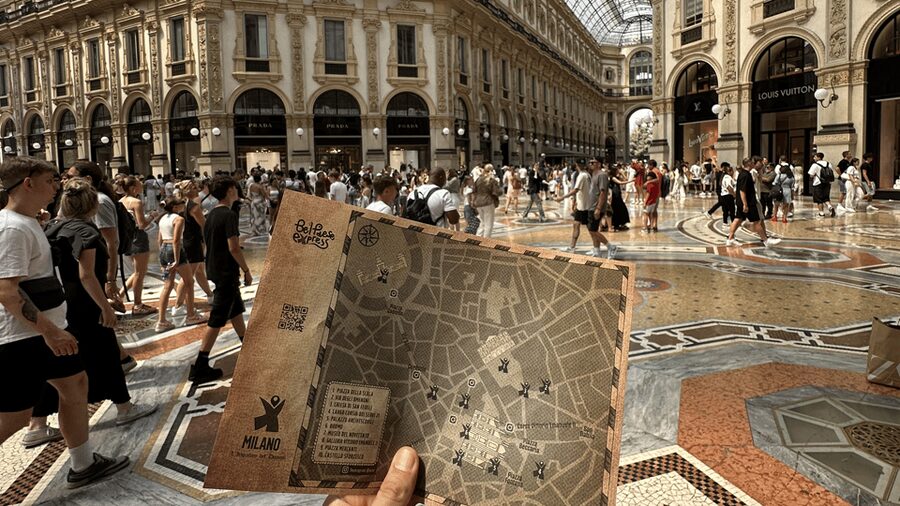
Milano City Escape, also known as The tenant of the Duomo, is built like a smartphone scavenger hunt with a Milan Cathedral hook. You get a web app plus a map, then follow a chain of riddles and clues to find treasures and solve the mystery of a missing hermit. It is the kind of activity that turns ordinary streets into prompts, so you notice details you might otherwise walk past.
The big appeal is how interactive it feels without requiring a tour guide at every step. You are not sitting around listening. You are figuring things out, moving on, and checking off clues. Done well, that makes a 3-hour window feel like more than a standard sightseeing loop.
This is also a social way to see Milan. Since it is meant for partners, family, and friends, you can split tasks naturally, one person reading the clue while another person scans for what the clue is pointing at. That turns the walk into an activity, not just transportation between sights.
You can also read our reviews of more city tours in Milan



How the self-guided game works on your phone (and why it matters)
This experience is self-guided, meaning there are no guides or supervisors walking with you. Practically, that shifts the whole experience to your setup and your rhythm. You are relying on the web app, the map, and the mission prompts that arrive through the platform.
Here is the flow you should expect:
- You start by activating the game.
- A time limit kicks in, with a total of 3 hours from first activation.
- You follow the map to a series of checkpoints.
- At each checkpoint, you read the mission prompt and solve the puzzle.
- The hunt ends with a final prize included in the experience.
Two details matter for your enjoyment. First, you need a smartphone with working data or connectivity for the app to function smoothly. Second, because you are running it yourself, you want to pay attention to clue wording, especially when the clue refers to specific features you can spot in front of you.
The mission is available in Italian and English, so language should not be a barrier if you choose the right version. And because the experience is designed to be run by the app, you are not waiting for a meeting point or a group schedule in the classic sense.
The legend near the Duomo: why the story is the best “tour guide”
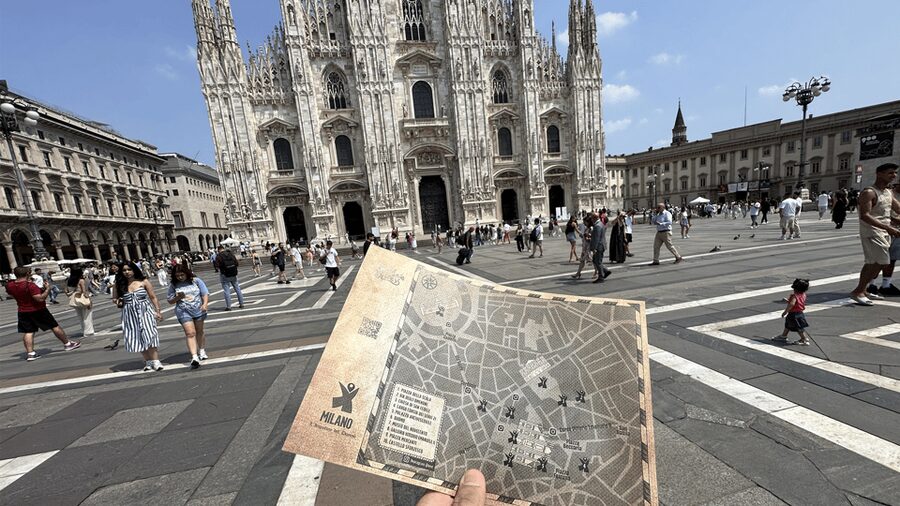
The core storyline is simple but effective: taking advantage of construction work at the Milan Cathedral, an hermit built a humble shack out of building scraps right next to the cathedral. Then, one night, someone destroyed it, and there is no trace of that poor man.
That kind of plot does two things. It gives you a reason to move, and it creates a sense of discovery as you work through clues. Even if you already know the Duomo area, you will likely look at the surroundings differently because each clue is a tiny question you are trying to answer.
In a normal tour, you might spend your time listening and admiring. In this format, you spend your time investigating. That changes what you notice: you look for visual matches to clue descriptions, and you connect small details to the broader mystery.
It also helps that the story is tied to a place people already associate with Milan Cathedral. The Duomo is a strong anchor, so your imagination gets to do the rest of the work.
Walking the clues around central Milan: what the checkpoints feel like

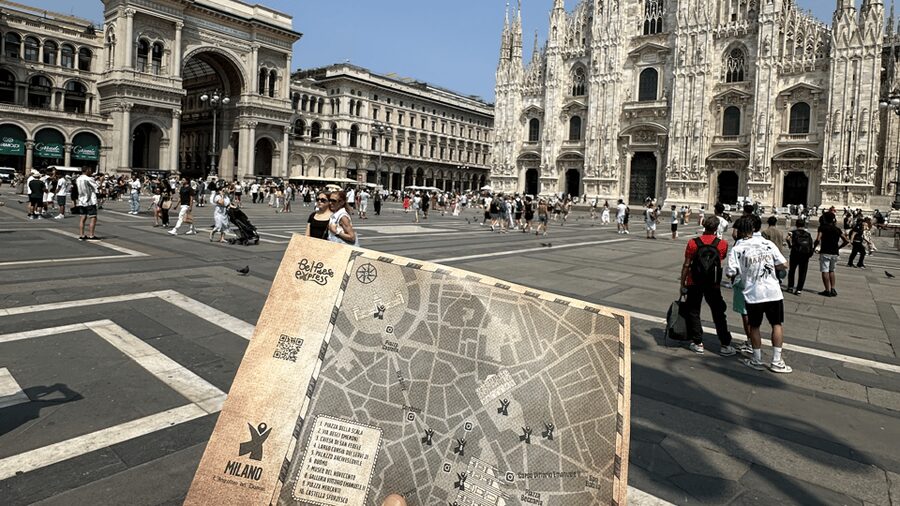
Because the experience is described as a mission walk with riddles and treasures, you should picture this less as a museum circuit and more as moving from one clue moment to another. You will likely start near the Duomo area, then continue through points that lead you around the center of Milan.
What makes these checkpoints “work” is the combination of:
- a map that keeps you oriented,
- puzzle prompts that push you to look carefully,
- and a treasure hunt structure that gives you progress.
Still, a good self-guided hunt depends on puzzle design. One consideration is that not every clue may feel equally “puzzle-like.” In some cases, you might get prompts that are more about directing you to the next stop than forcing you to solve a complex riddle. If you are expecting every question to be a clever brainteaser, you might feel a bit underwhelmed.
Another point to watch is clue interpretation. Some puzzles can hinge on very specific details. If a prompt refers to one kind of print, marker, or element, and you assume a different one, you can get stuck longer than you planned. The fix is simple: slow down and reread the clue text before you move. Even a one-word difference can change the answer.
If you want the walk to stay fun, use a steady pace:
- give each clue a fair attempt,
- then move on rather than spiraling into frustration,
- and keep the phone accessible so you do not waste time trying to find it.
“Criminals to catch” and the hunt vibe: how the theme shapes your route
The highlights mention riddles to solve, treasures to find, and criminals to catch. That is basically the mission tone. You are not just visiting points, you are completing tasks that feel story-driven. That theme matters because it turns the walk into an experience with momentum.
In practice, this kind of themed scavenger hunt often changes your behavior. You might:
- look for details you would normally ignore,
- compare what you see to what the clue asks,
- and keep moving so the story continues.
If you are traveling with kids, this is where the format can shine. The goal becomes fun and structured instead of “walk, look, repeat.” The same idea can make it a nice alternative to a second round of famous landmarks.
Also, because you are not dealing with a live guide, you can keep the pace that suits your group. One person may solve faster, another may notice visual details, and you can trade roles. That makes the activity feel less like work.





Final prize and the payoff at the end
Most of the value of a treasure hunt is in the payoff. Here, the platform promises a final prize included as part of the experience. That means you are not only hunting for clues as an exercise, you are working toward an endpoint with a reward.
Even if you personally do not care about prizes, the existence of a final reward often improves the structure. It gives you a reason to follow the full sequence and finish the mission rather than dropping out halfway.
If you want the best ending experience, plan your 3-hour window with real life in mind. Milan sidewalks can be busy, the weather can change your comfort level, and you might take extra time reading clues. Starting a bit earlier in the day and leaving enough buffer helps you reach the finish without feeling rushed.
Price and value: is $40 per group worth it?
The price is $40 per group up to four people for a duration of 3 hours. That pricing is the heart of the value story.
For two people, it might feel like an “activity cost” rather than a cheap add-on. But for a group that uses the full capacity, it can work out to a much lower cost per person than you would pay for a guided private experience. And because you are walking and solving, it is not just a ticket, it is a time-based challenge.
Here is how to judge it fairly:
- If you enjoy interactive tasks and you like puzzles, you are buying entertainment plus a guided-feeling route through the city.
- If you only want passive sightseeing, you may end up wishing you had booked something with a guide explaining what you are seeing.
One practical plus is that the experience is described as easy to play with just a smartphone. You are not paying extra for equipment or extra apps beyond what the web platform requires.
Who this is best for (and who should think twice)

This works best if you want something light, social, and different from a classic tour. It is built for:
- couples who want a shared mission walk,
- families looking for a structured way to spend an afternoon,
- and friends who enjoy solving clues together.
A specific kind of trip it fits well is a birthday or special occasion afternoon. The format makes it easy to turn “we’re walking around” into “we’re on a mission,” and that kind of change in tone can matter a lot.
It may be less ideal if you strongly prefer guided explanations, because there are no guides or supervisors with you. It also may be frustrating if you hate puzzles or if you expect every step to be a perfectly designed riddle. Some parts can feel closer to instructions than brainteasers, so your satisfaction will depend on your tolerance for clue hunting.
Timing, pace, and comfort tips for a smoother 3 hours

The experience is valid for 3 hours from first activation, and you can buy today then play whenever you want. That flexibility is useful because it lets you choose the time of day when Milan feels easiest for walking.
A smart approach is to schedule it for a time when you can concentrate. You do not want to start it right before you have to rush to another appointment. The experience suggests booking at least 2 hours before you intend to play, and it also notes you will receive the game code within 24 hours of the start of the experience. So plan so you are not trying to coordinate everything at the last second.
Also bring basic readiness:
- make sure your phone is charged,
- keep data access available for the app,
- wear comfortable shoes, since you are walking between checkpoints,
- and keep water handy if you are doing it in warmer weather.
Finally, because you are self-guided, you set the success level. If you treat each clue moment like a small puzzle rather than a hurdle, it tends to feel fun. If you race through without reading carefully, you can end up chasing answers.
Customer support and the human side of a self-guided activity
Even though you are on your own during the walk, responsive customer support can still make a big difference if something goes wrong with access or the app. The service has been highlighted as very helpful when support is needed, which is reassuring for a self-guided format.
That matters because self-guided does not mean self-serve forever. If your game code arrives late or the app does not load as expected, you want a provider who can help you get moving.
In other words, you are paying for an activity that runs on your device, but you are not completely cut off if you hit a snag.
Should you book Milano City Escape: The tenant of the Duomo?
Book it if you want a self-guided Duomo-area adventure that turns Milan into an interactive puzzle walk. It is a strong choice for couples, families, and friend groups who like missions, want something different than a standard sightseeing day, and can enjoy a walk driven by clues. The pricing structure is also a plus if you bring up to four people and plan to finish the full 3-hour run.
Skip it, or at least set your expectations carefully, if you want a highly structured route with a guide explaining each spot, or if you expect every clue to be a clever riddle rather than sometimes feeling like it mainly points you to the next stop. Since there is no live support during the walk itself, your enjoyment depends on how well you can follow the app prompts and interpret clues.
If you fall into the first group, this is an enjoyable way to see Milan with less sitting and more doing. If you fall into the second group, you might prefer a guided tour that guarantees explanations at every step.
FAQ
How long is Milano City Escape: The tenant of the Duomo?
It lasts 3 hours from the first activation of the experience.
Is this tour self-guided?
Yes. The experience is self-guided, without the presence of guides or supervisors.
How much does it cost and how many people can join?
It costs $40 per group up to 4 people.
What do I need to play?
You need a smartphone to immerse yourself in the mission, using the web app, map, and game code.
When will I receive the game code?
You will receive the game code within 24 hours of the start of the experience.
Is it wheelchair accessible?
Yes, the experience is wheelchair accessible.
More City Tours in Milan



More Tour Reviews in Milan
Not for you? Here's more nearby things to do in Milan we have reviewed











Milan Duomo & Cathedral Tours, compared.
 ★ 4.6Cathedral and Duomo’s Terraces Entrance TicketFrom $3061,054 reviews
 ★ 4.6Milan Cathedral: Duomo Terraces Ticket (No Church Access)From $226,111 reviews
 ★ 4.5Milan Cathedral Direct Entrance – Terrace ExcludedFrom $135,782 reviews
 ★ 4.7Fast-Track Milan Cathedral and Terraces Guided TourFrom $465,240 reviews
 ★ 4.0Milan’s Must See: Half-Day Tour of Last Supper, Duomo & La ScalaFrom $1304,193 reviews
 ★ 4.5Milan Duomo & The Last Supper Skip-the-Line Small Group TourFrom $1262,761 reviews
 ★ 4.8Duomo Rooftop and Cathedral Guided Tour with TicketsFrom $572,678 reviews
 ★ 4.5Best of Milan Experience Including Da Vinci’s The Last Supper and Milan DuomoFrom $1141,516 reviews
Browse the lists this tour appears in