
Review · WALKING TOURS
Milan: Treasure Hunt & Walking Tour
Milan is a great city for a do-it-yourself mystery. This treasure hunt turns a simple walk into a story where you play Captain of Justice, track the plague’s source, and solve challenges at five top city-center stops. I like that it’s not just sightseeing, you’re actively looking for details and clues as you move.
Two things I especially enjoyed: the game-style structure (map, puzzles, and a locked treasure box) and the way it nudges you to pay attention to Milan’s history as you go. The main drawback to consider is that it’s designed like a puzzle game, so if you want a classic, purely narrated walk, you may find the problem-solving part more work than you expected.
You’ll start and finish at the same spot, the Impossible Society on Corso di Porta Ticinese. The whole experience is meant for groups, and it runs best with at least one companion to bounce ideas off as you solve the locks.
Key highlights worth knowing before you go
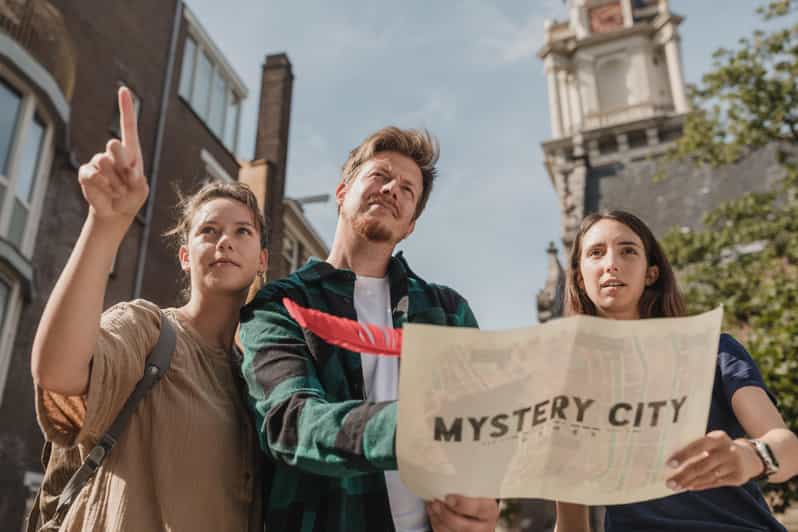
- Treasure map route through Milan’s city center, hitting five major sights along the way
- Plague-era storyline where you investigate riots and mass hysteria as Captain of Justice
- Puzzle challenges at each stop that lead you toward the treasure box solution
- Magical-tools backpack from The Impossible Society, with everything you need to play
- Private play for your group, with other groups doing their own game separately
A Milan Treasure Hunt With a Plague-Era Storyline
This experience is for people who like cities best when they feel slightly interactive. You’re not standing and listening to a long script. Instead, you’re walking with a purpose, following a treasure map and handling challenges tied to Milan’s past.
The story setting is Renaissance Milan, when a plague is spreading through the city. People panic, rioting breaks out, and blame spreads fast. You’re given a job that sounds dramatic for a walking tour, but it works. Every stop feels like another clue in a case, so your brain stays switched on instead of drifting toward autopilot sightseeing.
If you like history but don’t love lectures, that’s the sweet spot. The game framework gives you a reason to notice architecture, street layout, and small details you might otherwise miss on a normal day out.
You can also read our reviews of more walking tours in Milan


Meeting at The Impossible Society, Then Hitting the Streets
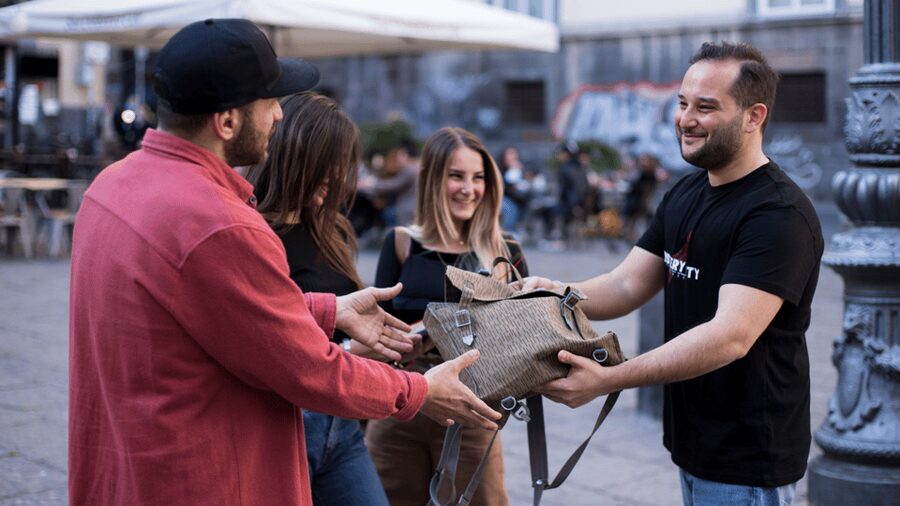
You meet at the Impossible Society, Corso di Porta Ticinese 107, and the game ends back there. Pick up a backpack full of what they call magical tools. Practically, it means you’re leaving the shop with a treasure map, a book of puzzles, and the items you need to play the game.
That setup matters. A lot of scavenger-style tours fail because you arrive and wait around, or you spend time figuring out how to start. Here, you’re supposed to begin immediately, so you can get into the rhythm quickly and stay focused on the route.
The host or greeter is available in English and Italian. That’s helpful if you need basic guidance to get started, especially if you’re not fluent in Italian and you want to feel confident you’re playing correctly.
One note before you go: there’s a mismatch in the accessibility info. The activity is described as wheelchair accessible, but it also says it is not suitable for wheelchair users. If you or someone in your group uses a wheelchair, I’d treat this as a question for the provider before booking.
How the 5-Stop Map Game Works (and Why It Feels Different)
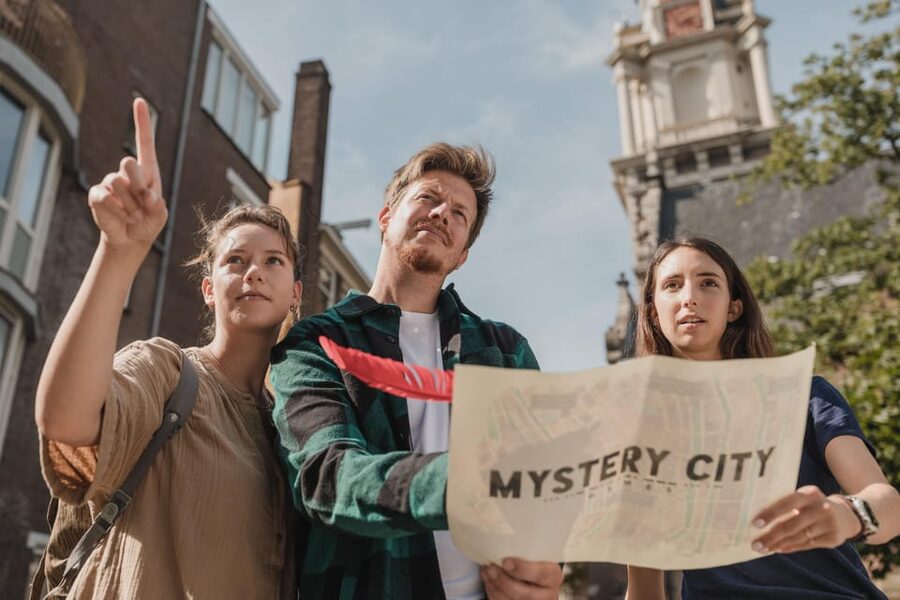
At a basic level, this is a self-guided walking tour with structure. You follow the treasure map to five must-see places in the city center. At each location, you get a bit of Milan history and a challenge tied to that spot. Solve each challenge and you gain access to the treasure box.
The treasure box is the emotional engine of the game. You’re not just collecting information, you’re working toward a final solution. Each lock you open feels like progress, not just wandering from one postcard spot to the next.
Timing is also part of the design. The game is scheduled for about two hours, but they encourage you to take your time to explore along the way. That gives you breathing room if you stop to take photos, read a little longer, or just walk at a comfortable pace while you think through the next puzzle.
Also, the play is private. You’ll play with your own group, and if there are other bookings at the same time, they play separately. That keeps the experience calm and focused instead of turning it into a crowded group scramble.
Checkpoint 1 to 5: Your City-Center Puzzle Path
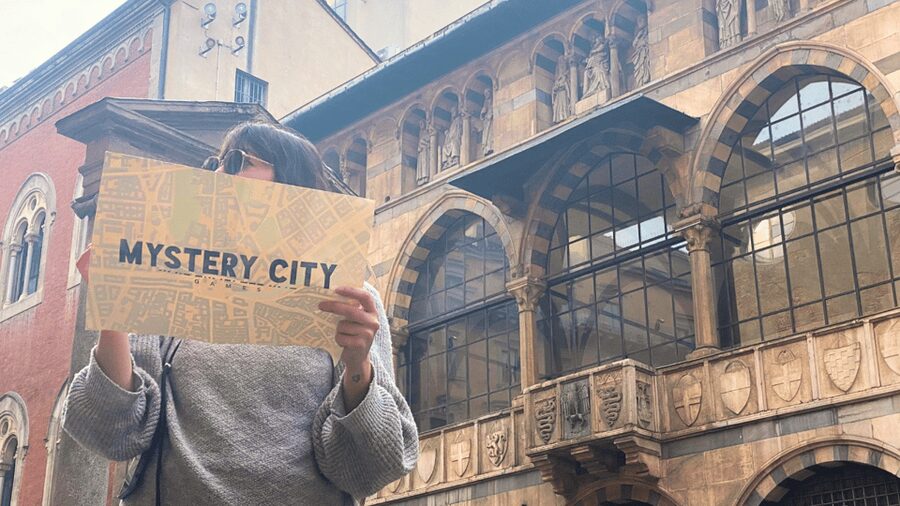
You won’t be handed a script that tells you exactly what to look at. Instead, the map leads you through the city center, and the story gives you a reason to slow down and study each stop.
Here’s what each checkpoint is built to do:
Stop 1: First clue and first lock
This opening checkpoint is about getting your bearings. You’ll learn a bit of Milan history and complete an early challenge that starts the chain toward opening the treasure box. Expect a short stretch where you confirm you understand the game mechanics, so take a minute here rather than rushing.
If you like games, this is where you’ll feel the flow click. If you prefer straightforward sightseeing, this is also where you decide if puzzle-solving is your vibe. Either way, you’ll know quickly whether the format works for you.




Stop 2: Story details you can actually spot
Midway through, you’ll get more of that Milan-history context and challenges that push you to notice secret details. The value here is simple: you end up looking closely at what you’d otherwise skim.
In a normal walking day, Milan can feel like a lot at once. The game prevents that overload by turning each location into a small task. You learn one idea, then you move on while it’s still fresh.
Stop 3: A tougher challenge pace
By the third checkpoint, puzzle difficulty may feel more demanding simply because you’ve already been solving for a while. This is usually a good time to pause if your group needs a breather. Don’t treat the tour like a race.
A practical tip: when you solve a challenge, take 30 seconds to confirm the next step on the map before you move. It saves time later and keeps your brain from bouncing between puzzle logic and direction-finding.
Stop 4: Where Milan history becomes part of the mystery
At the fourth stop, the history you learn connects more directly to the broader plague-mystery theme. This checkpoint is where you’ll likely start feeling like you’re investigating a real case, not just completing random mini-tasks.
If you enjoy storytelling, this is the moment where it can feel most satisfying. You’re connecting place-based clues to a bigger narrative, and it gives your photos and notes more meaning than a quick glance.
Stop 5: Final lock and the treasure box reveal
The last checkpoint wraps things up. You’ll solve the final challenge and open the last lock(s) on the treasure box to complete the mystery. Then you return to The Impossible Society to claim your prize.
This ending is important because it turns the tour into a finished experience. Many self-guided city games feel like you stop halfway through. Here, you have a clear end point, and you get closure when the box is solved.
One small consideration: because you’re completing puzzles, people who are easily frustrated by riddles might want a group that enjoys problem-solving. If your group loves teamwork, the final stretch is usually the most fun part.
Walking Pace, Timing, and What 2.5 Hours Actually Means
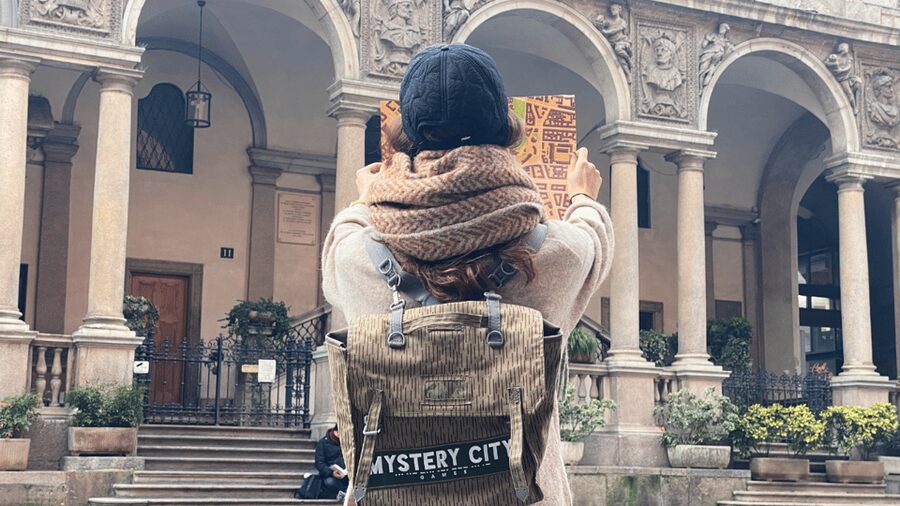
The scheduled duration is 2.5 hours. The game itself is around two hours, with extra time built in for taking your time and exploring along the way.
So what should you plan for on your day?
- Give yourself a little buffer before or after the start time, because you’ll want time to read instructions and settle in with your backpack.
- Expect breaks to be informal, like stepping aside to think through a clue. This is not a sit-and-rest tour, it’s a walking puzzle.
This format also means the “tempo” depends on your group. If you’re quick at puzzles and enjoy moving, you may finish closer to the two-hour mark. If you like reading and taking photos, it will naturally stretch toward the full 2.5 hours.
If you’re visiting Milan with tight timing, check your start time availability carefully. Since starting times aren’t listed here, you’ll want to confirm what hours they offer that day.
Value for $25 USD: What You Get for Your Money
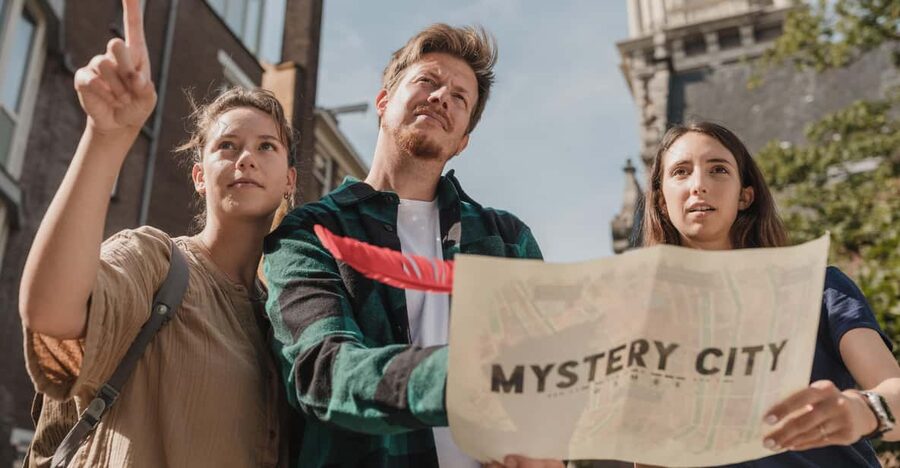
At $25 per person, this is priced like a value experience rather than a premium guided tour. What you’re paying for is structure plus materials.
Included in the price:
- A bag with a treasure map
- A book of puzzles
- Magical tools for the game
That matters because it’s not just access to a route. You’re getting the playing kit, and the price covers the design that turns the city into a puzzle path.
In plain terms, I think the value is best if you enjoy interactive experiences. If you’d rather have someone explain history in a straightforward way, you might prefer a traditional walking guide. But if you want to move through Milan while doing something with your hands and your brain, this format makes the cost feel reasonable.
Also, the private-group approach helps. You’re not competing with strangers for attention or crowding around the same landmark for the same photos.
Who This Works Best For (and Who Might Prefer Something Else)
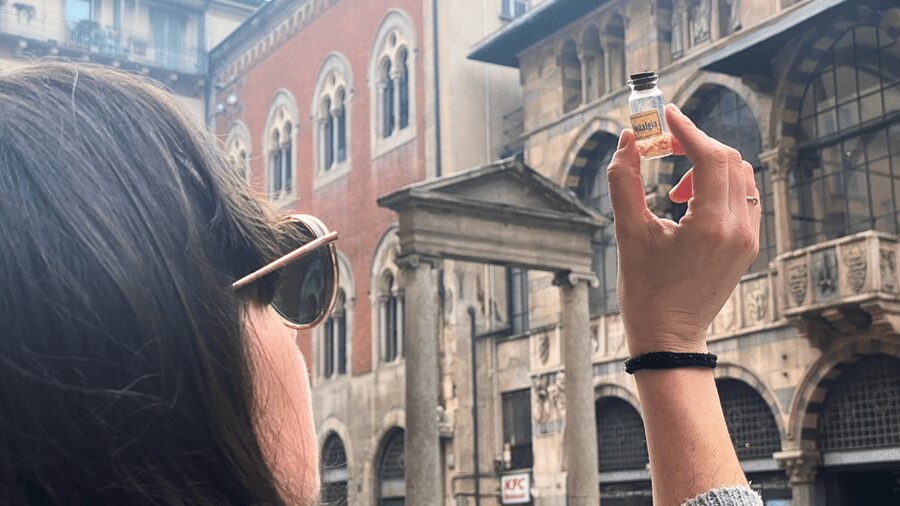
This game was designed for adults, but it’s suitable for children 7+ when they play with their parents. That’s a solid family-friendly range for an activity with puzzles, as long as you treat it like a shared mission rather than a strict timed challenge.
It’s also not recommended to play alone. The game is not described as impossible solo, but it is clearly built for group interaction. Even two people can make it smoother because one person can read clues while the other tries puzzle logic.
I’d say it fits these traveler types:
- Couples who like light teamwork and exploring without a rigid schedule
- Groups of friends who enjoy solving small mysteries together
- History-curious visitors who prefer learning through doing
And you might skip it if:
- You hate puzzles or want zero problem-solving
- Your group only wants quick stops and photo ops with no mental tasks
- You need full wheelchair suitability clarified in advance, because the accessibility info is internally inconsistent
Practical Tips for a Smooth Milan Puzzle Walk
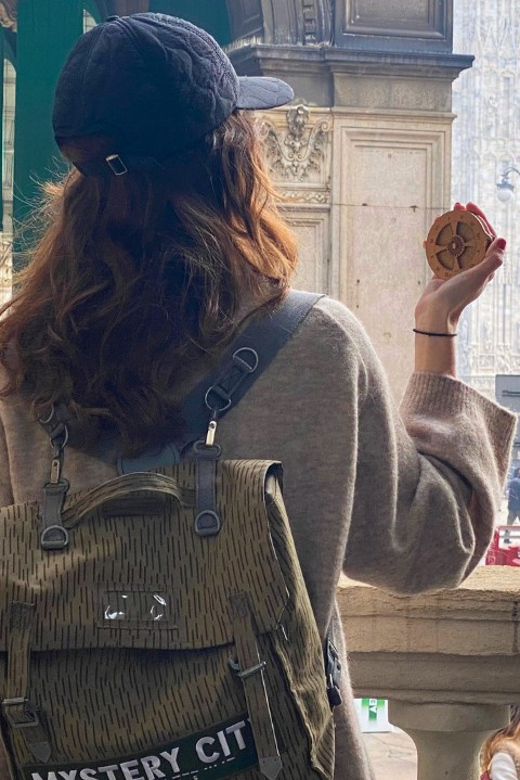
A few small choices can make the difference between a fun mystery and a stressful scavenger hunt.
Bring the right mood
You’ll get the most out of this if you’re willing to slow down. The tour is about noticing secret details and hidden places, which usually takes a little patience.
Wear good walking shoes
This is a walking tour through the city center. That seems obvious, but Milan days add up quickly, so choose shoes you’re comfortable in for continuous streets.
Plan for rain
In the case of rain, come prepared. Since you’re moving from place to place, you’ll want a rain layer and a way to keep puzzle pages dry.
Do the first checkpoint carefully
Start strong. Make sure you understand how the challenge system works before speed-walking ahead. A calm first checkpoint makes the rest smoother.
Choose your group size wisely
Since it is private but group-friendly, aim for a size where everyone can participate. If your group is too large, puzzle thinking can get chaotic. Too small, and you may feel stuck.
Should You Book This Milan Walking Tour?
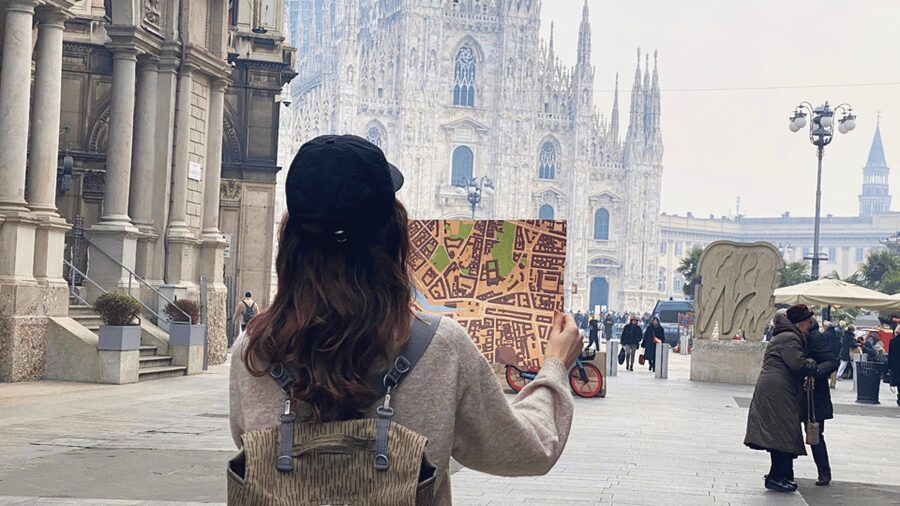
I’d book it if you want Milan that feels active and slightly playful. The story, the map, and the five-lock treasure box setup create a guided-feeling experience without the typical guided-tour pace. At $25 per person with the puzzle kit included, it also offers solid value for what is essentially an organized city game.
I’d skip it if your ideal day in Milan is purely relaxed sightseeing with a narrator doing all the talking. This tour asks you to solve challenges at each stop, and you only get the best payoff if you actually enjoy that process.
If you can go with at least one travel partner, and you’re ready to take your time for about 2.5 hours, it’s a great way to learn Milan in a way that sticks.
FAQ
What is the duration of the Milan Treasure Hunt?
The experience is listed as 2.5 hours. The game itself takes about 2 hours, with encouragement to take your time to explore.
How much does it cost?
It costs $25 per person.
Where does the tour start and end?
It starts and ends at The Impossible Society, Corso di Porta Ticinese, 107, 20123 Milano MI, Italy.
Is this tour self-guided or guided by a person?
It is self-guided. You pick up a backpack with the map and puzzle materials, then follow the route at your own pace.
Is it private?
Yes, all bookings are private. You play with your own group, and if other groups are booked at the same time, they play separately.
What languages are available?
The host or greeter is listed as English and Italian.
What is included in the price?
You get a bag containing a treasure map, a book of puzzles, and magical tools.
Do I need to know Italian?
No. The materials are supported by a host or greeter in English and Italian, and the game is suitable for visitors who speak either language.
Is it suitable for children?
It is designed for adults but is suitable for children 7+ when they play with their parents. It is not suitable for children under 6.
Is it okay to play alone?
It is not recommended to play alone, since it is designed as a group activity.
Is it wheelchair accessible?
The activity is described as wheelchair accessible, but it also states it is not suitable for wheelchair users. If accessibility is important, contact the provider before booking to confirm what works in practice.
More Walking Tours in Milan



More Tours in Milan


More Tour Reviews in Milan
Not for you? Here's more nearby things to do in Milan we have reviewed







Walking Tours, compared.
 ★ 4.7Guided Walking Tour & Last Supper Visit with TicketFrom $1015,409 reviews
 ★ 4.7Guided Walking Tour with Last Supper Skip-the-LineFrom $1061,143 reviews
 ★ 4.8Da Vinci’s Last Supper and Guided Walking TourFrom $70683 reviews
 ★ 4.8Guided Street Food Walking Tour with Food TastingFrom $58654 reviews
 ★ 4.7Guided Walking Tour with Duomo and the Last SupperFrom $152615 reviews
 ★ 4.5Skip-the-Line Guided Walk and “The Last Supper”606 reviews
 ★ 4.7Best of City Walking Tour with Last Supper TicketsFrom $112359 reviews
 ★ 5.0Milan Highlights and Hidden Gems Private Guided Walking TourFrom $246302 reviews
Browse the lists this tour appears in