
Review · WALKING TOURS
Milan: Highlights and Secret Treasures walking tour
Milan hides its best corners in plain sight. I like the small-group attention you get on a 3-hour loop, and I also love that you mix famous squares with lesser-seen churches like San Bernardino alle Ossa and San Maurizio. The one catch is that some stops require separate admission tickets, so expect to spend a bit more once you’re there.
This is the kind of tour where the guide does more than point. Guides such as Elisa and Alexa have a knack for making details click, and the tour runs with English up front, plus French and Italian speaking help available.
Timing matters in Milan, and this walk works best when the weather cooperates and you feel okay walking between sights. You’ll start at Piazza Fontana and finish at Sforzesco Castle, with a mobile ticket and easy public-transport access along the way.
Key highlights to look for
- Small group, bigger attention so you can ask questions without feeling rushed
- Mix of major sights and quieter stops across old squares and religious landmarks
- Free entries at several churches plus options that may need tickets
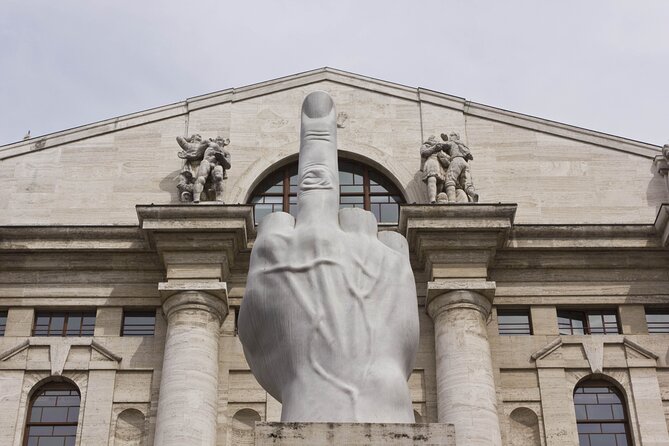
- The “finger” at Piazza Affari and the business district angle, not just sightseeing
- Your walk ends at Castello Sforzesco with a natural feel for an after-walk stroll
Milan in 3 hours: how this walk helps you get your bearings fast
If Milan feels like a city that moves quickly, this tour is built to slow things down just enough. You get a real sense of how neighborhoods connect, not just a list of monuments. The route is tight, and the pace is set for learning without the stress of sprinting from one place to the next.
I especially like the way the stops jump between eras. You start at a fountain tied to the city’s oldest layers, then you work through churches that explain faith and art in Milanian terms, and you finish in the Sforza zone where politics and power show up in stone.
Because this is a private tour, it’s only your group, which usually means fewer compromises. You’re not folded into a crowd. Instead, you can keep track of the story arc, and you’re more likely to hear the small clarifications that make Milan feel less confusing.
One practical note: since some entries are free and others are not included, it helps to come with a mindset of flexibility. I’d rather you show up prepared to pay a ticket or two than surprised when you reach a stop.
You can also read our reviews of more walking tours in Milan

Piazza Fontana and the “ancient thread” through Milan’s earliest landmarks
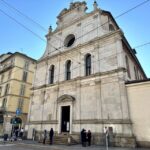
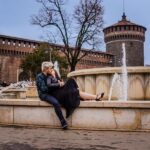
You begin at Piazza Fontana, home to the most ancient fountain in Milan. This isn’t just a pretty photo stop. Your guide uses it as a starting point to talk about how Milan’s center developed and how old and new Milan share the same geography.
From here, the tour sets a theme: Milan may look modern from street level, but it keeps older stories embedded right underneath your feet and in the buildings you pass. That idea matters because it changes how you look at the city after the tour. You won’t just see streets. You’ll see continuity.
At this stage, you’ll likely get your first set of orientation tips, like where the city’s major historic and modern pulses run, and why certain squares feel like hubs even when the architecture changes.
San Bernardino alle Ossa and the Santa Maria presso San Satiro contrast
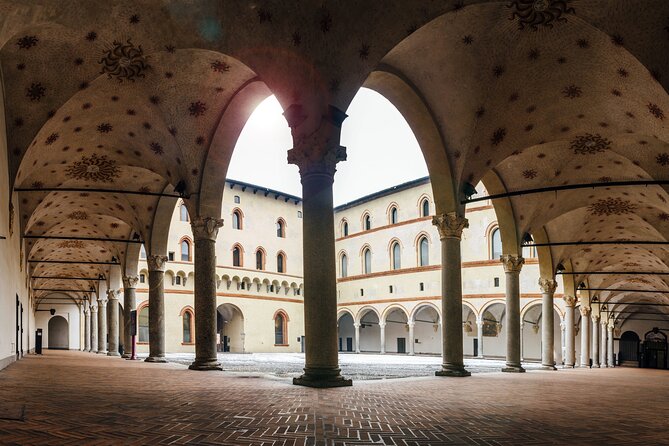
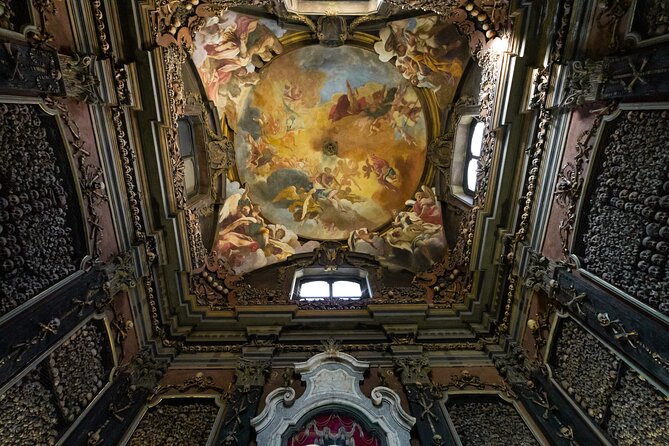
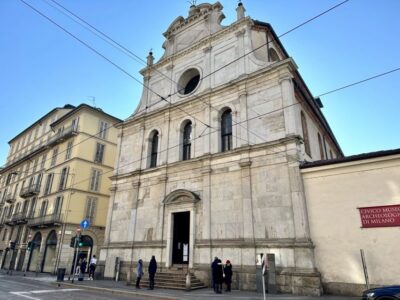
One of the most striking stops is Santuario di San Bernardino alle Ossa. It’s about San Bernardino and how Milan preserves a theme that’s both sacred and unusual. You’ll pause long enough to absorb what makes the church memorable, and since admission is free, you can focus on the experience instead of the cost.
Then you shift to Chiesa di Santa Maria presso San Satiro. This is one of those Milan churches that works on multiple levels. You get to see the building’s character from the outside, hear what makes the space special, and learn why the church gets attention in the first place. Admission is free here too, which makes it an easy win for your walking budget.
The nice part about this section is contrast. One stop leans into a darker, more specific religious story. The next leans into architecture and illusion-like design, which is a very Milan combination: practical streets, then suddenly something unexpected appears.
If you like the way art and religion mix in European cities, this is where the tour starts to feel like more than a highlight circuit.
Ca’ Granda, Torre Velasca, and Piazza Missori: modern shape meets older fabric
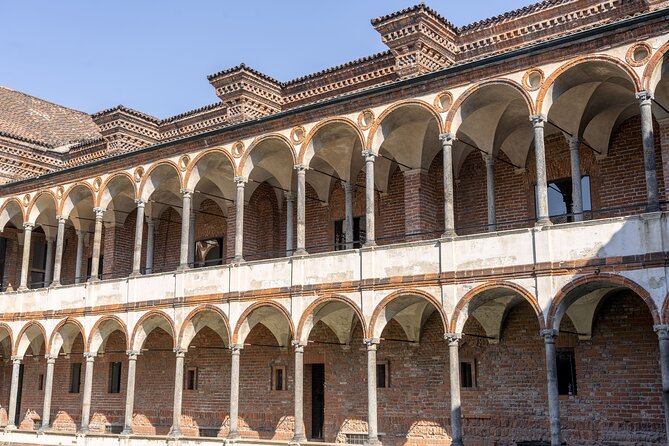
Next comes Ca’ Granda, a major landmark tied to the city’s history. Admission is not included, so you may not go in, but you still get the context that helps you understand what you’re looking at. Even a short stop at the right angle can make a huge difference, because the building tells a story about how Milan organized institutions and power.
Right after that, you hit Torre Velasca, described as the most central skyscraper in Milan. It’s only a short pause, but it’s important. This is the city side of the tour where you stop thinking only in medieval terms. The skyline angle helps you connect the historic center with the way Milan expresses ambition through modern architecture.
Then you reach Piazza Missori, where you’ll see remnants of San Giovanni in Conca Church. This stop is brief, but it’s one of those moments that changes how you notice Milan. In many Italian cities, the past sits behind walls, under plaques, and in partial structures. Milan is similar, and this is a good spot to learn how to read those clues without needing a degree in architecture.
If you want quick payoffs, this section delivers: you’ll see institutional Milan (Ca’ Granda), skyline Milan (Torre Velasca), and layered Milan (Piazza Missori).
Piazza San Sepolcro and the Ambrosiana Library area: a Roman thread
At Piazza San Sepolcro, you get to connect Milan to the Roman world. The stop references the old Roman Forum of Mediolanum, plus it points you toward the Ambrosiana library area. Admission is not included, so plan on learning from what you see around the square and hearing how the location fits into the bigger map.
This is one of those stops where a guided explanation turns a normal street corner into a meaningful point on the city timeline. Milan doesn’t always advertise its Roman roots loudly, but the story is there if you know what to look for.
In practical terms, this stop also helps you mentally group sights. After Piazza San Sepolcro, the city starts to feel like it has sectors, and your navigation later in the day becomes easier.


Piazza Affari and the business side of Milan, including the finger monument

Then comes Piazza Affari, the business and financial district. It’s also where you’ll notice a provocative monument, described in the tour as the finger. This is your shift from churches and history to finance-era Milan.
This stop is short, but it’s smart. If your day in Milan is only churches and palaces, you miss the feeling of a city that also runs on money, design, and modern industry. Piazza Affari gives you that other Milan pulse.
I like that the tour doesn’t treat finance like a boring add-on. Instead, it frames it as part of why Milan feels like it has its own rhythm. Even if you aren’t a finance person, you’ll walk away understanding what that area symbolizes.
San Maurizio al Monastero Maggiore: the Sistine Chapel feel in a calmer setting
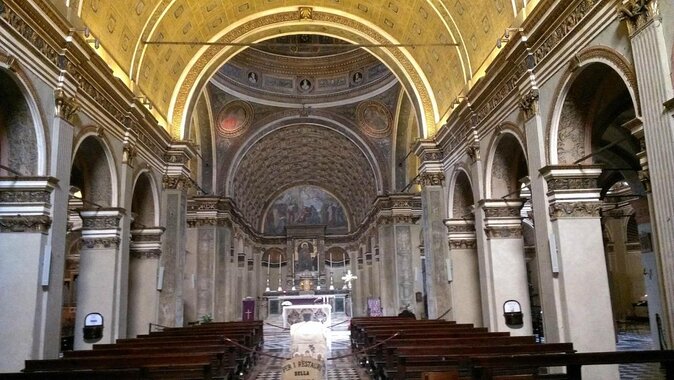
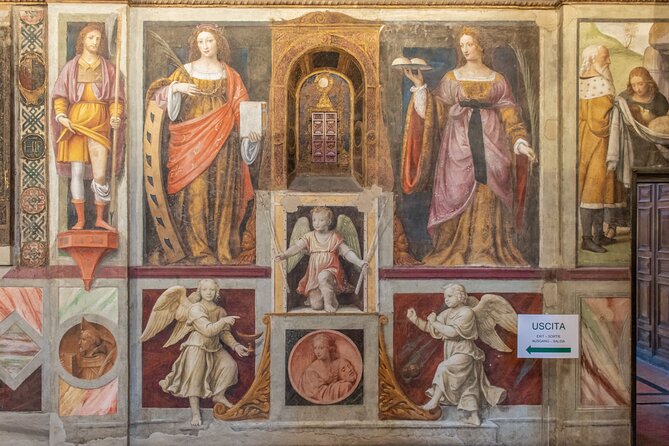
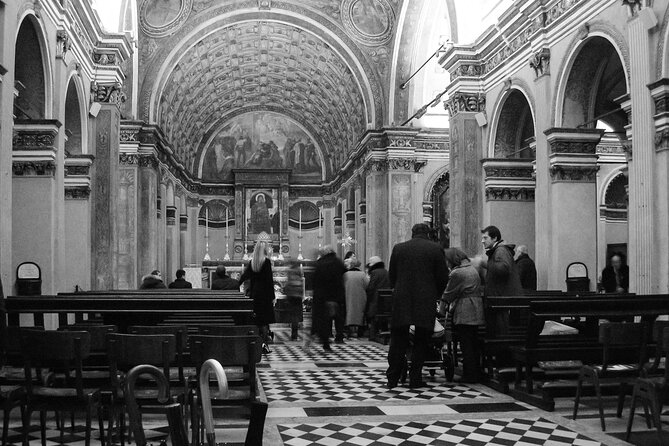
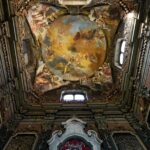
One of the most memorable stops is Chiesa di San Maurizio al Monastero Maggiore. It’s often called the Sistine Chapel of Milan, and admission is free.
This is where you slow down a bit. Even without going deep into a full museum visit, the tour gives you a reason to pay attention. You’ll learn what makes this church special and why it draws comparisons to famous painted spaces.
The practical upside is that it fits nicely into a walking tour. Free entry plus a high impact interior concept means you get real art and history without spending extra time buying tickets.
If you care about Renaissance-era detail and want something that feels theatrical without being overwhelming, this is a strong stop. It also balances the earlier, heavier emotional tone of San Bernardino alle Ossa with an art-focused moment.
Piazzale Luigi Cadorna and Castello Sforzesco: finishing with momentum
After the church focus, you reach Piazzale Luigi Cadorna, described as the most colorful train station. It’s only a quick stop, but it helps you end with a sense of how people flow through Milan day to day. Stations tell you a lot about a city’s energy, and Cadorna is a good example.
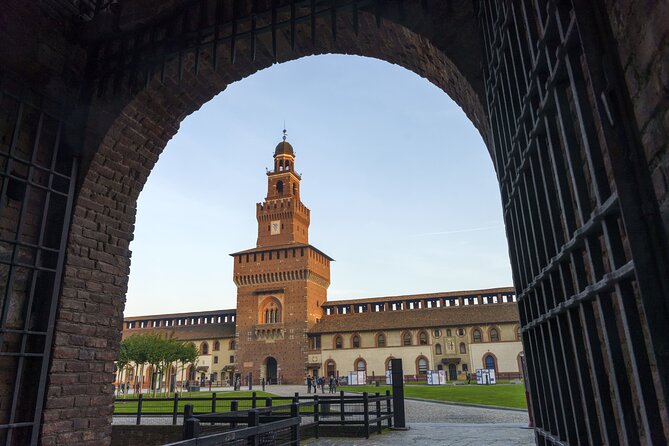
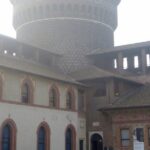
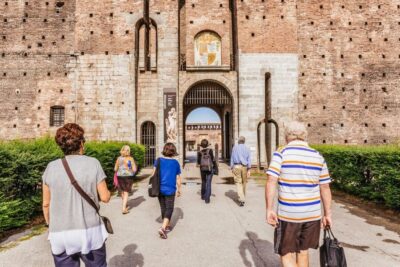
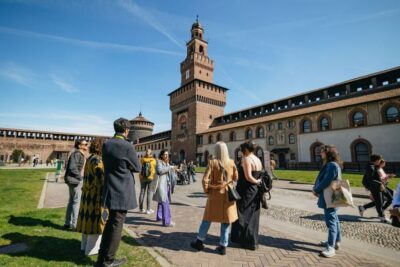
Then you finish at Castello Sforzesco. The tour ends at the castle area, and this stop is listed with free admission. Even when you do not go deep into every courtyard, finishing here gives you a satisfying landing point. You can keep walking on your own, grab a bite nearby, or simply take in the fortress feeling after a morning of historical wayfinding.
This is also where the tour’s pacing makes sense. You move from small, specific stops into a major anchor you can explore freely after you’re done with the guided part.
Ticket strategy and what to do if a site is closed
Admission rules are mixed on this walk. Some stops are free, like San Bernardino alle Ossa, Santa Maria presso San Satiro, San Maurizio, and the Sforzesco castle area. Others are marked as not included, including Ca’ Granda and several of the square stops.
So here’s how I’d plan: assume you might need to buy one or more tickets for the paid-entry locations. Build a little cash or card flexibility into your day. If you hate surprises, it’s worth checking current entry conditions the day of your tour.
Also, access can change. Some parts connected to older or underground Milan can be restricted at times. The good news is that the walk still covers a lot above ground and stays focused on the main story points you came for.
Comfort, pace, and how to make the most of the guide
This is an approximately 3-hour walking tour. You’ll be outside for most of it, so wear shoes you trust. Milan sidewalks are fine, but you will cover enough ground that you do not want soft, fancy footwear.
Because the group is small and the tour is private to your party, you can use the guide’s knowledge in a practical way. I’d ask at least one question that connects today to tomorrow, like what area is best for an evening stroll or where you’d go for a relaxed meal after the castle.
One thing that comes through strongly in guide styles here is food guidance. You might get pointed toward a good bakery and even a strong gelato pick, and those are exactly the kinds of local hints that improve a day in Milan without adding effort.
Is this tour worth $119.21 per person?
At $119.21 per person, the value depends on how you like to travel.
If you enjoy getting context, asking questions, and seeing multiple highlights without mapping everything yourself, this price can feel fair. You’re paying for a structured route, a guide who can explain the why behind what you see, and a 3-hour format that won’t eat your whole day.
You also get some cost relief from free entry stops. Even without assuming you’ll pay for every paid-entry location, the balance of free and not-included entries helps the math.
The most common reason I’d say it’s worth it: first-time Milan visitors often find the city overwhelming. This tour gives you a clean outline of the center, plus the more specific emotional payoff of churches and squares you might otherwise skip.
If you already know Milan well and only want a single major attraction, you might prefer a shorter self-guided plan. But for most people who want both landmarks and a few quieter corners, it’s a solid way to get oriented.
Should you book this Milan highlights and treasures walk?
Book it if you want a tight route with real context, especially if you like churches, architecture, and Milan’s Roman-to-modern story. It’s a good fit for people who want more than a quick photo tour, but also don’t want a long day.
I’d think twice if you hate extra ticket stops, since some entries are not included. It’s also smart to schedule it for a day with decent weather, since the experience requires good conditions.
Overall, if you’re aiming for a first taste of Milan that feels personal and guided, this is one of the more practical ways to do it, with an ending that naturally sets you up for more exploring around Castello Sforzesco.
FAQ
How long is the Milan Highlights and Secret Treasures walking tour?
It runs about 3 hours.
How much does the tour cost?
The price is $119.21 per person.
What languages are offered on the tour?
It is offered in English, with a guide also available in French and Italian.
Is the tour private?
Yes. Only your group will participate.
Where does the tour start and end?
It starts at Piazza Fontana, 20122 Milano MI, Italy, and ends at Sforzesco Castle, Piazza Castello, 20121 Milano MI, Italy.
What time does the tour start?
The start time is listed as 10:00 am.
Are admission tickets included for the sights?
Admissions are only included when the stop says Free. Stops marked not included require separate admission tickets.
Is there a mobile ticket?
Yes, the tour includes a mobile ticket.
Is free cancellation available?
Yes. You can cancel for a full refund up to 24 hours before the experience’s start time.
Does the tour depend on weather?
Yes. The experience requires good weather, and if it’s canceled due to poor weather you’ll be offered a different date or a full refund.
More Walking Tours in Milan


More Tours in Milan
More Tour Reviews in Milan
Not for you? Here's more nearby things to do in Milan we have reviewed






Walking Tours, compared.
 ★ 4.7Guided Walking Tour & Last Supper Visit with TicketFrom $1015,409 reviews
 ★ 4.7Guided Walking Tour with Last Supper Skip-the-LineFrom $1061,143 reviews
 ★ 4.8Da Vinci’s Last Supper and Guided Walking TourFrom $70683 reviews
 ★ 4.8Guided Street Food Walking Tour with Food TastingFrom $58654 reviews
 ★ 4.7Guided Walking Tour with Duomo and the Last SupperFrom $152615 reviews
 ★ 4.5Skip-the-Line Guided Walk and “The Last Supper”606 reviews
 ★ 4.7Best of City Walking Tour with Last Supper TicketsFrom $112359 reviews
 ★ 5.0Milan Highlights and Hidden Gems Private Guided Walking TourFrom $246302 reviews
Browse the lists this tour appears in